


Why Have You Hardly Heard Of Nanocrystalline Motors?
May 20, 2026
We always talk about amorphous motors, but why nanocrystalline motors are rarely adopted?
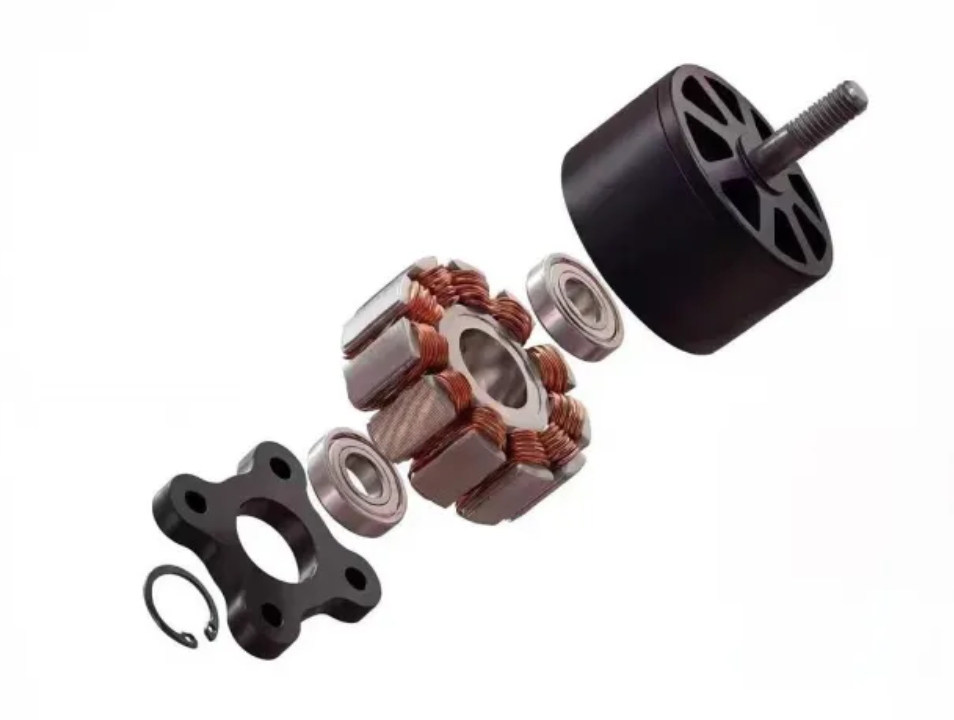
It is well known that silicon steel is the mainstream material for stator cores of amorphous motors, followed by the trending amorphous materials. Technically speaking, the material hierarchy goes: nanocrystalline > amorphous > silicon steel. So why is nanocrystalline material not suitable for motor cores?
Here is a practical data comparison of the three materials:
1. Magnetic Flux Density
Silicon steel > Amorphous alloy > Nanocrystalline alloy
- Silicon steel: approx. 1.7-2.0T
- Amorphous alloy: approx. 1.4-1.6T
- Nanocrystalline alloy: approx. 1.25T
2. Power Frequency Core Loss
Nanocrystalline alloy < Amorphous alloy < Silicon steel
- The no-load core loss of amorphous cores is only 1/6 of that of silicon steel cores at power frequency.
- The no-load core loss of nanocrystalline cores is merely 1/4 of amorphous cores under the same condition.
3. High Temperature Stability
Silicon steel > Nanocrystalline alloy > Amorphous alloy
- Curie temperature of silicon steel: around 700℃
- Curie temperature of nanocrystalline alloy: around 570℃
- Curie temperature of amorphous alloy: around 400℃
4. Processing Difficulty
Silicon steel < Amorphous alloy < Nanocrystalline alloy
- Silicon steel features good toughness and is easy for stamping forming.
- Amorphous ribbons are brittle and hard to stamp.
- Nanocrystalline ribbons are even more fragile and not applicable for stamping.
5. Mass Production Cost
Nanocrystalline alloy > Amorphous alloy > Silicon steel
- Silicon steel: only several thousand RMB per ton
- Amorphous alloy: over ten thousand RMB per ton
- Nanocrystalline alloy: 40,000 to 50,000 RMB per ton
From the above five-dimensional data comparison, it is clear that silicon steel remains the top choice for general operating conditions, high-power equipment and cost-effective applications.
Amorphous materials have become the preferred option for the new energy industry for one simple reason: it is currently the only advanced soft magnetic material that is commercially viable, cost-saving and efficiency-enhancing.
Although nanocrystalline materials boast the optimal high-frequency loss performance, their low saturation magnetic flux density and excessively high production costs make them impractical for motor core manufacturing at the current stage.


