Amorphous Cores

Your Professional Amorphous Cores Manufacturer in China

Sunbow Group specializes in the design, development and production of new-type amorphous, nanocrystalline, silicon steel sheets and other magnetic materials and related products. The company's main products include various types of amorphous, nanocrystalline ribbons and high and low voltage current transformer cores, precision current transformer cores, common mode inductor cores, PFC inductor cores, high frequency power transformer cores and related devices.

Customized Solutions

We are at the forefront of a design led approach to delivering challenging and custom solutions for magnetic cores or components for production. Whether your need is simple or complex, we can develop a solution to achieve your goals. With in- house experts we can design, develop and test prototypes that meet performance and environmental requirements of your application.

Advanced Equipment

The company has advanced equipment such as large-scale vacuum smelting furnaces, pressure spraying belts, various magnetic annealing furnaces and close cooperation with domestic scientific research institutions and universities, which ensures the company's R & D ability and product quality.


Complete Qualifications

At present, the company has two production bases, with a number of patented technologies, and has passed ISO9001, IATF16949 quality management system certification. All products have passed ROHS, SGS and other environmental protection certifications.


Wide Range of Applications

The company mainly serves the fields of new energy vehicles, photovoltaic power generation, wind power generation, smart home appliances, smart meters, wireless charging, and various power supplies, inverters, filter inductors, and shielding materials in the national strategic emerging industries.


Introduction of Amorphous Cores
 

The amorphous core is a soft magnetic material. It is produced through the advanced technology of rapid solidification of molted metal. It consists stacks of laminations that are made from silicon steel. Amorphous core contains excellent magnetic properties, mechanical properties, high electrical resistivity, and electromechanical properties.


productcate-633-472


Advantages of Using Amorphous Cores

●High permeability
●High magnetic density
●Reduced distribution and core losses
●Wide range of frequency properties
●Low coercivity forces
●Low no-load loss
●Low temperature rise
●Affordably priced
●Excellent resistance to corrosion
●High harmonic wave tolerances


The Characteristics of Amorphous Cores

An amorphous core, also known as an amorphous C core or amorphous C-type core, is a type of transformer core made from an amorphous material. Amorphous materials are non-crystalline solids that do not have a regular, repeating atomic structure like crystalline materials. Instead, their atoms are arranged in a disordered, random arrangement.
Amorphous C cores are made from a thin strip of amorphous material that is rolled into a cylindrical shape. The material is typically made from a metallic alloy, such as iron, cobalt, or nickel, with small amounts of other elements such as boron, silicon, and phosphorus.
Amorphous C cores have several advantages over traditional transformer cores made from crystalline materials, such as silicon steel or electrical steel. They have a lower core loss, which means they are more efficient and generate less heat during operation. They also have a higher saturation flux density, which allows for the use of smaller cores in transformers and other electrical devices.
Amorphous C cores are used in a variety of applications, including transformers, inductors, and chokes. They are particularly useful for low-power, high-frequency applications, as they have a low core loss and a high saturation flux density.

productcate-701-520


Differences Between Amorphous Core and Silicon Steel Core Electrical Transformers
 

Material Composition

●Amorphous Core: Amorphous cores are made from a non-crystalline, disordered material. They are typically composed of iron-based alloys with elements like silicon, boron, and phosphorus. This unique structure gives them specific magnetic properties.
●Silicon Steel Core: Silicon steel cores are made from thin strips of silicon steel that are coated or laminated to reduce eddy current losses. These steel cores have a crystalline structure with aligned magnetic domains.

Magnetic Properties

●Amorphous Core: Amorphous cores have lower core losses compared to silicon steel cores, which means they experience less energy loss due to hysteresis and eddy currents during the transformer’s operation.
●Silicon Steel Core: Silicon steel cores have higher core losses due to eddy currents and hysteresis losses, resulting in higher energy consumption and potential heating during operation.

Efficiency

●Amorphous Core: Transformers with amorphous cores tend to be more efficient due to their lower core losses. This can lead to reduced energy consumption and lower operating temperatures.
●Silicon Steel Core: Transformers with silicon steel cores have relatively higher losses, which can impact their efficiency and lead to more heat generation.

Cost

●Amorphous Core: Amorphous core materials can be more expensive to produce than silicon steel, which can make transformers using amorphous cores costlier.
●Silicon Steel Core: Silicon steel is a more cost-effective material, which can make transformers using silicon steel cores more affordable.

Applications

●Amorphous Core: Amorphous core transformers are often used in applications where energy efficiency is a top priority, such as in distribution transformers and certain industrial applications.
●Silicon Steel Core: Silicon steel core transformers are commonly used in a wide range of applications, including power distribution, voltage transformation, and various industrial processes.

Size and Weight

Amorphous Core: Amorphous cores can be physically smaller and lighter compared to transformers with silicon steel cores of similar ratings, due to their lower core losses.

Noise Level

Amorphous Core: Transformers with amorphous cores tend to produce less audible noise during operation compared to transformers with silicon steel cores, mainly due to their lower losses and reduced vibration.


productcate-637-510


Magnetic Properties

Operating Flux Density:
Typical Single Phase: 1.3 – 1.4 Tesla
Typical Three Phase: 1.25 – 1.35 Tesla

Saturation:
Induction (T) as cast: 1.56

No-load Core Loss and Exciting Power:
At the test condition of 1.3T, 50Hz, specific loss ≤0.18W/kg; specific exciting power ≤0.45VA/kg.
At the test condition of 1.3T, 50Hz, specific loss ≤0.20W/kg; specific exciting power ≤0.60VA/kg.
The no-load loss and exciting power of the three-phase – Evans core will be approximately 25% higher and will vary according to the specific design.


Physical Properties

Core Space Factor:
Guaranteed Minimum: 86%

Density:
g/cm3 as cast: 7.19
Core Design Standards:

Ribbon width (A): 142mm, 170mm, 213mm
Core build-up (B): 0~300mm; maximum
Window width (C): 55~1500mm; tolerance: +3/-0m
Window height (D): 180~2000mm; tolerance: +3/-0mm
Joint build (G): B x 1.10~1.20mm
Window radius (R): 6.4 +/-1.5mm
Outermost layer shearing length: not more than 100000mm
Continuous service temperature: 150oC

The core surface is coated in Epoxy Resin, not more than 2mm thick per side, (Dimension (H)) Ribbon width +4mm.

productcate-699-481


Different Types of Amorphous Cores


Toroid Nanocrystalline Core
Iron nanocrystalline alloys consist of iron, silicon, boron, niobium and cuprum. The iron-based amorphous alloy containing Cu and Nb will form very fine grain structure when it is annealed above the crystallization temperature. The grain size is only 10-20 nanometers, and this amorphous alloy can form crystalline materials by special crystallization annealing which are called nanocrystalline alloys. Nanocrystalline materials have the excellent properties of high saturation magnetic induction intensity, high permeability, low coercivity, low loss and good stability, high toughness,wear and corrosion resistance, etc. Because the nanocrystalline materials has optimum performance and price in metal soft magnetic materials, it can replace silicon steel, premalloy and ferrites to be the ideal materials for middle and high frequency transformer, mutual inductor, inductance component.

C Core
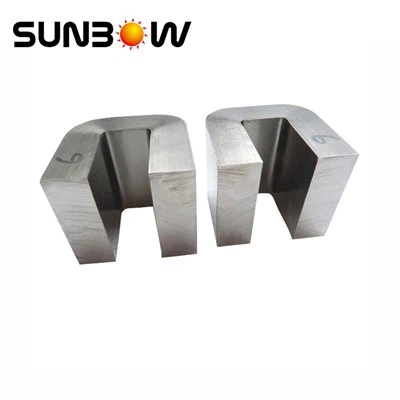
The amorphous C-type alloy core has the advantages of simple structure, convenient coil assembly, convenient inductance adjustment, etc., The amorphous C-type alloy cores has high magnetic permeability and low iron loss characteristics in the frequency range of 5KHz-20KHz, is widely used as the filter inductor in the inverter circuit of the solar photovoltaic industry.

Fe-based Amorphous Toroidal Cut Core
Toroidal cut cores are Metglas cores made with iron-based Metglas. They have a great high saturation induction and a high permeability, allowing the use of smaller sizes coated with boxed cores. These Fe-based amorphous toroidal cut cores need flyback transformers, DC inductors, and PFC boost chokes for applications.

Fe-based Amorphous Rectangular Cut Core
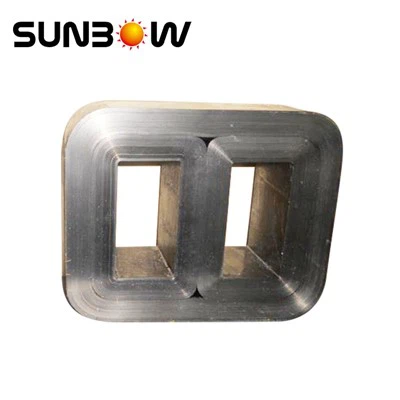
These rectangular cut cores have many outstanding properties. They have a high saturate induction which allows the core volume to decrease. It also has an air cap that assists the DC bias property. It also has a low core loss, which allows low-temperature rise. Last but not least, the most important feature, its rectangular form, makes mounting the coil easier.

Fe-based Amorphous Filter Inductor Cores
Fe-based amorphous filter cores have properties such as high frequency, low core loss, permeability range, and stable inductance. It has a very high saturation flux density and an excellent Anti-DC bias property. It only needs fewer winding turns. Not only that, but it has excellent conductivity; however, this is a costly component. The nanocrystalline core has some of the best features, such as good filter effectiveness, small volumes and sizes, and fewer turns of copper wire.

Anti-DC Hybrid Current Transformer Core
This anti-DC hybrid current transformer core comprises an amorphous alloy core and a nanocrystalline core. This can detect the AC signal accurately while resisting the DC component.These anti-DC hybrid current transformer cores highly resist DC performances and have the best temperature characteristic. It also has a high-cost performance. To install this core, two important things are required; the energy meters and electric power system measurement.


Amorphous Core Industry Applications

Amorphous magnetic cores allow OEMs to decrease component size and reduce weight while still improving electrical performance. These benefits make amorphous cores an excellent choice for high-frequency applications such as inverters, adjustable speed drives, and both switched-mode and uninterruptible power supplies (SMPS and UPS). Additional applications include:

AC and DC transformers

Inductors

Common mode and differential mode chokes

Magnetic amplifiers


Elements of Amorphous Core
 

Highly Power Efficient / High Electrical Resistance
He core material has high magnetic susceptibility, very low coercivity, and high electrical resistance. The high resistance and thin foils leads to low losses. On the downside, amorphous core have a lower saturation induction.


Solid and Strong Structure
Amorphous Core has high strength. It can be prepared in a variety of ways, such as rapidly cooling from the molten state.


Intelligence Protection
Advances in electrification have led to the greater efficiencies in a whole range of new market solutions. Existing core magnetics material often struggles to dissipate less power with high flux density and low coercivity.


productcate-634-493


Amorphous Cores For PFC Chokes and Inductors

Amorphous cut cores are made from metallic glass materials without a crystalline structure (as seen in silicon steels, permalloys, orthonol, and nanocrystalline cores). The amorphous atomic structure results in much higher resistivity than what is exhibited by crystalline alloys; therefore, amorphous cut cores offer excellent frequency response and efficiency.
Key Characteristics:
●Composition: Fe•Si•B
●Shapes: Cut Cores
●Flux Density (T): 1.56
Amorphous cut cores are a choice solution for high frequency, low loss applications such as uninterruptible power supplies (UPS), SMPS power factor correction (PFC) chokes, filter inductors, and high frequency power transformers and inductors. When compared to ferrite cores, amorphous cores provide a wider operational temperature range, much higher flux capacity, and significantly higher impedance at high frequencies. Amorphous cut cores are strong in both compression and tension. They resist fracture and corrosion.
Currently available in cut (C shape) cores. Toroids and split cores available upon request.


Our Certificates


All products have passed ROHS, SGS and other environmental protection certifications.


productcate-749-300productcate-749-300


Our Testing Equipment


productcate-666-357productcate-665-357


Common Problem of Amorphous Cores


Q: What are the downsides of using amorphous metal?

A: On the downside amorphous alloys have a lower saturation induction and often a higher magnetostriction compared to conventional crystalline iron-silicon electrical steel.

Q: What is the difference between amorphous core and ferrite core?

A: Amorphous magnetic metal has high permeability due to no crystalline magnetic anisotropy. Where typical ferrite cores can only operate up to a flux saturation level (Bsat) of 0.49 Tesla, amorphous metal cores can be operated at 1.56 Tesla.

Q: What are the advantages of amorphous core transformer?

A: An amorphous core in a transformer has several advantages and disadvantages. Advantages: Reduced core loss: The amorphous core has a lower hysteresis loss and eddy current loss, which results in a reduction in core loss. Efficiency improvement: The reduced core loss leads to an increase in the transformer's efficiency.

Q: What is amorphous magnetic materials?

A: The amorphous soft magnetic materials in general are alloys of the ferromagnetic metals as Fe, Co, Ni with the additions B, P, C, Si to amorphousize the alloys which additionally were alloyed by the transition groups elements as V, Nb, Ta, Cr, Mo and Mn.

Q: Is amorphous metal expensive?

A: The cutting and forming of amorphous metal laminations is expensive due to increased tool wear from their hardness (over C-80 Rockwell), and being very thin there is a greater number of stamping operations, and the material does not stack as well.

Q: What is the purpose of amorphous metal?

A: Amorphous metals combine unique material properties. This makes them predestined for a wide range of innovative high-tech applications in various industries such as aerospace, medical technology, robotics or e-mobility.

Q: Why do you need a ferrite core?

A: A ferrite cable core is designed to clean common mode noise (signal) generated from either a signal line or power cable. How do Ferrite Cores Work? Ferrite cores are used to suppress electromagnetic emissions by blocking low-frequency noise and absorbing high-frequency noise. This avoids electromagnetic interference.

Q: What are the characteristics of amorphous metals?

A: Amorphous metals are non-crystalline, and have a glass-like structure. But unlike common glasses, such as window glass, which are typically electrical insulators, amorphous metals have good electrical conductivity and can show metallic luster.

Q: Which of the following is the characteristics of amorphous core transformer?

A: The transformer with an amorphous core is highly electrically efficient. The special feature of amorphous transformers is that the materials that are used in the in the amorphous core transformers are highly magnetically susceptible, have a low coercivity and high electrical resistance.

Q: What are the physical properties of amorphous?

A: Amorphous solids have two characteristic properties. When cleaved or broken, they produce fragments with irregular, often curved surfaces; and they have poorly defined patterns when exposed to x-rays because their components are not arranged in a regular array. An amorphous, translucent solid is called a glass.

Q: What is the composition of the amorphous core?

A: The amorphous metal transformers are manufactured from core made with Fe-based amorphous ribbon. Amorphous ribbon is made up of mainly Iron, with small percentages of Silicon and Boron (Fe78, B13, and Si9) by fast quenching of molten metal at a rate of 106 deg per second.

Q: What are 3 examples of amorphous?

A: Answer: Plastics, glass, rubber, metallic glass, polymers, gel, fused silica, pitch tar, thin layer lubricants, and wax are examples of amorphous solids.

Q: What is the difference between amorphous and nanocrystalline cores?

A: Nanocrystalline and amorphous cores are made from metallic alloys developed with high technology, granting a particular set of characteristics for these materials. The differential is in it´s alloy amorphous microstructure, a microstructure similar to glass, which is obtained with the use of the melt-spinning technique. By the end of the production process, the amorphous cores remain with a metallic-glass structure, while the nanocrystalline cores obtain a refined structure of nanometric magnetic grains scattered in an amorphous metallic matrix.

Q: What is an Amorphous C core?

A: Amorphous C core is suitable for high power usage, C type core is easy to install, easy to wind copper wire. High saturation flux density, low core loss. Widely used for solar inverter filter, medium frequency transformer, output inductor, PFC coke.

Q: What is the importance of amorphous core transformer from the energy conservation point of view?

A: The most significant benefit of an amorphous transformer is that the amorphous steel has lower hysteresis loss. In other words, transformers made of this amorphous steel waste less energy (in the form of heat) during the magnetization and demagnetization of the core.

Q: How does the amorphous core transformer work?

A: In a transformer the no-load loss is dominated by the core loss. With an amorphous core, this can be 70–80% lower than with traditional crystalline materials. The loss under heavy load is dominated by the resistance of the copper windings and thus called copper loss.

Q: Is a ferrite core just a magnet?

A: Ferrites that are used in transformer or electromagnetic cores contain nickel, zinc, and/or manganese compounds. Soft ferrites are not permanent magnets. They have magnetism (much like mild steel), but when the magnetic field is removed, the magnetism decreases.

Q: What is the structure of an amorphous crystal?

A: An amorphous structure has no organization (not a crystalline structure), and the atomic structure resembles that of a liquid. Commonly, amorphous materials mentioned in the Materials Science Engineering field are amorphous soilds unless otherwise clarified otherwise.

Q: What are examples of amorphous elements?

A: Some examples of amorphous solids include rubber, plastic, and gels. Glass is a very important amorphous solid that is made by cooling a mixture of materials in such a way that it does not crystallize. Glass is sometimes referred to as a supercooled liquid, rather than a solid.

Q: Why is amorphous better than crystalline?

A: The difference between crystalline and amorphous is mainly based on the structure. The former has a sharp melting point and is brittle. Amorphous solids are softer and more pliable than crystalline ones. They are anisotropic.

We're professional amorphous cores manufacturers and suppliers in China, specialized in providing high quality customized service. We warmly welcome you to buy amorphous cores made in China here from our factory.

block cores, metglas transformer core, amorphous block

(0/10)

clearall