Amorphous Material

Your Professional Amorphous Material Manufacturer in China

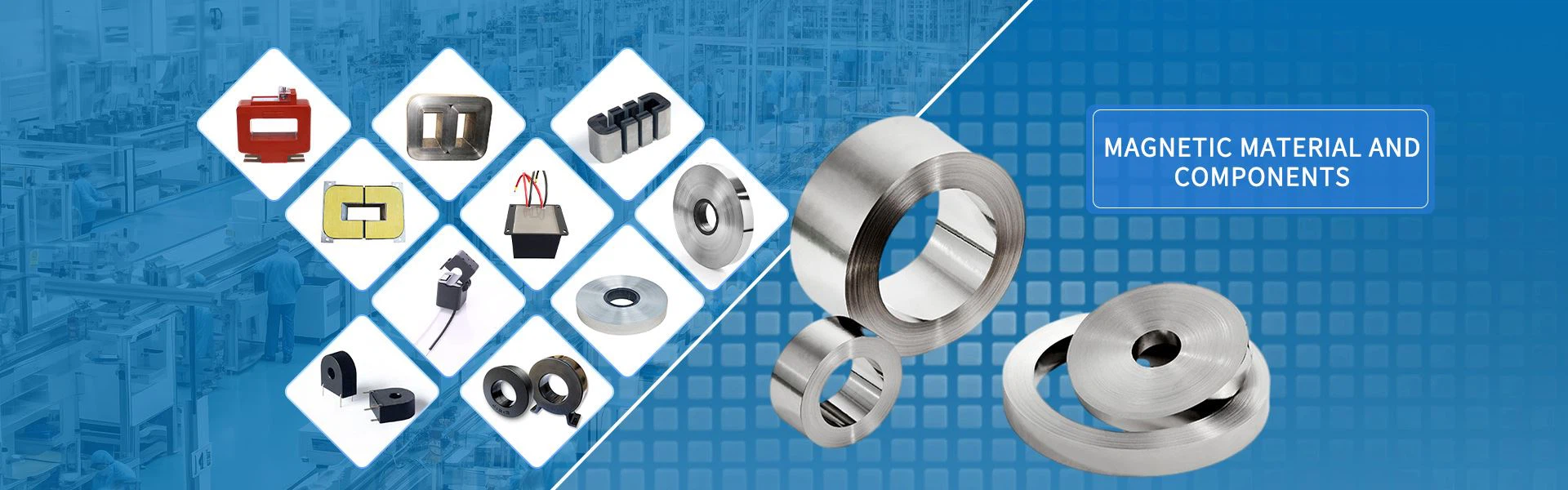
Sunbow Group specializes in the design, development and production of new-type amorphous, nanocrystalline, silicon steel sheets and other magnetic materials and related products. The company's main products include various types of amorphous, nanocrystalline ribbons and high and low voltage current transformer cores, precision current transformer cores, common mode inductor cores, PFC inductor cores, high frequency power transformer cores and related devices.

Customized Solutions

We are at the forefront of a design led approach to delivering challenging and custom solutions for magnetic cores or components for production. Whether your need is simple or complex, we can develop a solution to achieve your goals. With in- house experts we can design, develop and test prototypes that meet performance and environmental requirements of your application.

Advanced Equipment

The company has advanced equipment such as large-scale vacuum smelting furnaces, pressure spraying belts, various magnetic annealing furnaces and close cooperation with domestic scientific research institutions and universities, which ensures the company's R & D ability and product quality.


Complete Qualifications

At present, the company has two production bases, with a number of patented technologies, and has passed ISO9001, IATF16949 quality management system certification. All products have passed ROHS, SGS and other environmental protection certifications.


Wide Range of Applications

The company mainly serves the fields of new energy vehicles, photovoltaic power generation, wind power generation, smart home appliances, smart meters, wireless charging, and various power supplies, inverters, filter inductors, and shielding materials in the national strategic emerging industries.


Introduction of Amorphous Material
 

Amorphous materials are ubiquitous in natural and engineered systems. Granular fault gouge in earthquakes faults, thin film lubricants, and bulk metallic glasses are seemingly disparate systems which are similar in that they possess an amorphous structure. Colloids, emulsions, window glass, dense polymers, and even biological tissues are other examples.
Although ruptures on earthquake faults, nanoscale friction measured using a Surface Force Apparatus, and deformation in bulk metallic glasses appear to be very different phenomena, they share a common feature: the region where deformation or slip occurs is populated by an amorphous material. Amorphous solids are comprised of particles (atoms, grains, bubbles, molecules) arranged so that the locations of their centers of mass are disordered; their structure is essentially indistinguishable from a liquid. However, these materials are ``jammed'' and exhibit a yield stress like a solid. Other examples of amorphous materials include colloids and emulsions, foams, glass-forming molecular liquids, traffic jams, and even living tissue.

Coated Tape Wound Core


What is the Difference Between Crystalline and Noncrystalline Solids

In crystalline solids, constituent particles (atoms, molecules or ions) arrange in a three-dimensional periodic manner. Non-crystalline solids do not have a consistent arrangement of particles. So, non-crystalline solids are amorphous solids. With regard to the geometry of these solids, crystalline solids have a well-defined geometrical shape due to the regular arrangement of unit cells, unlike Non-crystalline solids that do not have well–defined geometrical shape. Furthermore, crystalline solids have a long range order while non-crystalline solids have a short range order.
Crystalline solids have a high fixed value for the heat of fusion and a definite melting point. However, non-crystalline solids do not have a fixed value for the heat of fusion and they melt over a range. Moreover, crystalline solids are true solids. They show all the properties of solids. On the contrary, Non-crystalline solids do not show all the properties of solids. Therefore, they are called “pseudo solids”. Energy in crystalline solids is lower than that of non-crystalline solids.


Structural Analysis of Amorphous Material

An ideal gas, ideal liquid, and ideal glass all represent the same highest symmetry state for a molecular system and when averaged over a suitable time period and spatial volume, the probability of finding a molecule at any point in space is a constant related to density. These high symmetry states have the full translation and rotation symmetry of free space and full conformation degrees of freedom appropriate for the system temperature. These systems are considered to be macroscopically uniform and isotropic. Any effective local molecular order will involve single molecules and will be related to just the rigid intra-molecular structure itself. In reality, the high density and high viscosity of a glassy system will force the formation of locally rigid and high density arrangements of molecules where the nearest neighbor positional relationships will be driven the repulsive inter molecular forces (i.e. molecular shape). With respect to the locally ordered groups, the full translation and rotation symmetry of free space is maintained keeping the macroscopically uniform nature of a glass. It is these locally rigid arrangements of molecules that give rise to the observed X-ray amorphous powder patterns. Glassy materials are just one example of solid state amorphous systems that will give rise to X-ray amorphous powder patterns. Any single -phase non-crystalline material with reproducible short-range molecular order and no long-range molecular order will give rise to an X-ray amorphous powder pattern. Characterization of the local molecular order is a fundamental component in understanding the chemical and physical stability of non-crystalline materials.

Nanocrystalline Current Transformer Core


Features of the Amorphous Material
 

Amorphous solids are called non-crystalline solids. It is called non-crystalline solids because its atoms and molecules are not arranged in a well-defined manner. The following characteristics of the Amorphous solids are given below.

01/

Ordinarily, the matter constituents particles that enter the solid are arranged in an organized or random manner. So, the state of the molecules and atoms is not stagnant. Hence, it is different from one solid to another solid.

02/

Apart from this, they don’t have a definite geometry and form due to the random arrangement of the constituents particles of the amorphous solids.

03/

The short-range charge is located in amorphous solids.

04/

Amorphous Solids are likewise named Supercooled Liquids and Pseudo solids because the Amorphous solids don’t comprise crystalline arrangement and have the capability to flow.

05/

The nature of these solids is isotropic. The properties of the Amorphous solid are measured in all directions that are closer to being the same.

06/

It does not demonstrate the pepper shape of the melting point due to the irregular contents of amorphous solids.

07/

If the Amorphous solids are cut, you can locate the damaged constituent particles to be irregular in form and geometry.

08/

Apart from this, another characteristic is that it doesn’t have a bounded heat of fusion because of the lack of an intense melting point.


Industries and Applications of Amorphous Material


Amorphous metals combine unique material properties. This makes them predestined for a wide range of innovative high-tech applications in various industries such as aerospace, medical technology, robotics or e-mobility.


Tape Wound Core for DC Immune Current Transformer


Aerospace

Advantages:
●Resilience: Wear resistance in extreme environments and low temperature ductility.
●Corrosion resistance: As manufactured without coatings and postprocessing.
●Lightweight constructions: Design possibilities, complex geometries, tight tolerances, miniaturization.
●Reliability: Fatigue strength, low hysteresis, high elasticity.
Applications:
●Bearing housings and supports
●Drilling heads and tools
●Engine mounts and discs
●Impeller, rotor and blade components
●Joints, gears, hinges and shafts
●Propulsion and engine applications
●Seals and flaps
●Spring and damping elements
Key requirements for components in the aerospace industry are not only weight savings and high stability, but also the ability to withstand cyclic loads in extreme environmental conditions. Amorphous metals are characterized by their high strength (> 2GPa bending strength) and the resulting freedom in geometric design (thinner or smaller component dimensions) as well as high corrosion resistance compared to commonly used titanium alloys or stainless steels. In addition, components made of amorphous metals are low-temperature ductile and exhibit good fatigue strength values (in the range of 400 MPa at 1 billion cycles and 25 Hz) making them particularly suitable for use in space applications.


Automotive & Mobility

Advantages:
●Strength: High yield strength, corresponding fatigue strength and high hardness.
●Elasticity: High storage capacity of elastic energy.
●High magnetic permeability: Low coercive force.
●Precision: Tight tolerances and good repeatability range.
●Surface quality: Scratch-resistance, valuable surface feelings.
Applications:
●Decorative elements
●Electric motor parts
●Gears and drive components
●Haptic components
●Mounting elements
●Suspensions
The future of mobility is characterized by the successive use of technological progress. This is where amorphous alloys make their contribution by enabling weight savings through 3D printing (up to 20 % compared to equivalent steel components) and design possibilities due to their high strength (1.6 GPa tensile strength) and elasticity (up to 2 %). Components can be made thinner, more delicate or smaller without sacrificing stability. Due to their very good hardness (> 480 HV) as well as their good creep and excellent corrosion resistance, amorphous metals are equally suitable for resistant use under continuous load as well as under punctual impacts. Spring parts, hinges and damping applications can be consistently redesigned with amorphous metals. This also makes new forms of mobility possible. Whether creep-resistant rotor blades of drones, flight cabin supports or pressure sensors with high accuracy and low hysteresis, amorphous metals are already proving to be pioneering materials for tomorrow's mobility.

Coated Tape Wound Core


Lifestyle (Watchmaking, Wearables, Instruments, Sports)


Advantages:
●Biocompatibility: Anti-bacterial in contact with skin.
●Cosmetic quality: High-quality optical appearance.
●Design: Freedom of geometric design and manufacturability within tight tolerances.
●Elasticity: Reliable transmitter or resonator of high amounts of elastic energy (also acoustic).
●High wearing comfort: Low thermal conductivity and high surface quality.
●Miniaturization: Integration and protection of wearable technologies in small spaces.
●Resistance: Scratch, wear and corrosion resistance.
●Strength: Protection of sensible and functional technology.
●Uniqueness: Exceptional material class.
Applications:
●Instruments (guitar bridge and bridge pins, mouthpieces for wind instruments, tuning forks)
●Sports (rackets, frames, bars)
●Watchmaking (bezels, bracelet pins, clasps, housings, shock-absorbing safety elements)
●Wearables (bracelets, hinges, housings, rings)
New classes of materials are interesting not only because of their uniqueness in high-end watches, but also because of their suitability in the search for materials for future technologies such as wearables. Here, the most sensitive technologies can be efficiently protected in miniaturized space and the housing design can be perfected. Lifestyle components made of amorphous metals are not only highly corrosion-resistant due to their biocompatibility, but also antibacterial and thus enable pleasant skin contact due to their low thermal conductivity and high surface quality. Functional advantages result from the high storage capacity of elastic energy (> 14 J/m3), among other things in acoustic energy in musical instruments, which also allows sports equipment’s like racket handles and aids to be designed efficiently.


Medical Technology
Iron-based Nanocrystalline Ribbons
Amorphous Ribbon
Amorphous C Core
Amorphous C Core

Advantages:
●Biomechanical Properties: Low young’s modulus, high yield strength.
●Certified biocompatibility: No cytotoxicity, cell deformation or ion accumulation.
●Durability: High wear and corrosion resistance.
●Dynamic fixation and stabilization: High fatigue strength and high elastic limit.
●Miniaturization and design improvements: 3D-Printing or injection molding within tight tolerances and reproducible manufacturing.
Applications:
●Implants (spine, dental, traumatology)
●Medical devices and fixtures
●Surgical and dental instruments
Preferred materials for personalized implants, orthopedic and medical devices are facing a multitude of high requirements at the same time. Besides biocompatibility standards, manufacturability and surface functionality, especially the adaption of complex individual geometries are current challenges that create the bottleneck between a material solution approach and the application reference. The promising approach of using amorphous metals in this context has already been shown to be viable in practical studies and implementations. The potential to overcome previous challenges in design, functionality, and biocompatibility for biomedical applications from amorphous alloys have already been confirmed in in-vivo results. The demanding applications in medical technology demonstrate the advantageous fields of action of amorphous alloys, which unfold their potential in these challenges and open up new possibilities for providing better care to patients in the future.


Our Certificates


All products have passed ROHS, SGS and other environmental protection certifications.


productcate-749-300productcate-749-300


Our Testing Equipment


productcate-666-357productcate-665-357


Common Problem of Amorphous Material


Q: What are noncrystalline solids?

A: Non- crystalline solids are “amorphous solids”. Unlike crystalline solids, they do not have a definite geometrical shape. The atoms in solids pack closely together than in liquids and gases. However, in non-crystalline solids, particles have a little freedom to move since they are not arranged rigidly as in other solids. These solids form after sudden cooling of a liquid. The most common examples are plastic and glass.

Q: What is non-crystalline material?

A: In condensed matter physics and materials science, an amorphous solid (or non-crystalline solid) is a solid that lacks the long-range order that is characteristic of a crystal. The terms "glass" and "glassy solid" are sometimes used synonymously with amorphous solid; however, these terms refer specifically to amorphous materials that undergo a glass transition.Examples of amorphous solids include glasses, metallic glasses, and certain types of plastics and polymers. Amorphous materials have an internal structure consisting of interconnected structural blocks that can be similar to the basic structural units found in the corresponding crystalline phase of the same compound. Unlike in crystalline materials, however, no long-range order exists. Amorphous materials therefore cannot be defined by a finite unit cell. Statistical methods, such as the atomic density function and radial distribution function, are more useful in describing the structure of amorphous solids.

Q: What are the characteristics of amorphous substances?

A: Amorphous solids have two characteristic properties. When cleaved or broken, they produce fragments with irregular, often curved surfaces; and they have poorly defined patterns when exposed to x-rays because their components are not arranged in a regular array. An amorphous, translucent solid is called a glass.

Q: How do you characterize amorphous materials?

A: Total diffraction analysis is one of the main characterization methods for determining the local structure within non-crystalline materials (amorphous solids). It makes use of the complete diffraction signal from a sample and treats each data point as an individual observation.

Q: What is the property of amorphous material?

A: Amorphous material is one kind of nonequilibrium material; its characteristic of atomic arrangement is more like liquid and has no long-range periodicity. The glass-forming ability of an alloy is closely related to its composition, and is quite different in various alloys.

Q: What are the properties of amorphous minerals?

A: Amorphous solids have two defining properties. They create particles of odd, often twisted surfaces when cleaved or broken; and they have poorly described patterns when exposed to x-rays, because their components are not organized in a typical sequence. A transparent, amorphous material is called wine.

Q: What are the general characteristics of amorphous Fibres?

A: Amorphous micro-steel (AMS) fibre made by cooling of liquid pig iron is flexible, light and durable to corrosion, then to be compatible with high flowable and disperable states of mixing as well as high ductile post-cracked performances to apply in fibre-reinforced cementitious composites.

Q: What is the characteristic of amorphous polymers?

A: Amorphous polymers are in their glassy state below the glass transition temperature Tg and rubbery above this temperature. Below Tg, the short-range molecular interactions between nonlinked atoms are strong and local loads are carried from atom to atom.

Q: Are amorphous materials stronger?

A: But on the other hand, amorphous materials, particularly MQ glasses, are more brittle, weaker (in terms of mechanical strength) and softer than their counterparts—crystalline materials.

Q: What is amorphous form of a material?

A: Amorphous forms are, by definition, non-crystalline materials which possess no long-range order. Their structure can be thought of as being similar to that of a frozen liquid with the thermal fluctuations present in a liquid frozen out, leaving only “static” structural disorder.

Q: Are amorphous materials ductile?

A: Ductile behavior of amorphous metals, their ability to sustain localized flow at high nominal stresses, is attributed to a mechanism which alleviates the severe stress conditions prevailing near potential cleavage flaws.

Q: What physical properties are usually different for crystalline and amorphous materials?

A: Crystals have definite melting points and their constituents are arranged in an orderly fashion. Amorphous materials do not have definite melting points. As a result, they are unstable. This means they can be easily broken and are often not re-usable for industrial processes.

Q: What is an example of an amorphous material?

A: Amorphous material: An amorphous material (AM) has a non-crystalline structure that differs from that of its iso-chemical liquid and does not undergo structural relaxation and the glass transition when heated. Examples are: Glass, Gels, plastics, various polymers, wax, thin films.

Q: Are amorphous materials brittle?

A: The absence of grain boundaries, the weak spots of crystalline materials, leads to better resistance to wear and corrosion. Amorphous metals, while technically glasses, are also much tougher and less brittle than oxide glasses and ceramics.

Q: Can amorphous materials conduct electricity?

A: However, there are exceptions, such as some types of amorphous silicon that can conduct electricity under certain conditions. Yes,the metallic variants do. Amorphous metals, also known as metallic glasses, are good conductors and some are even superconductors at low temperature.

Q: Do amorphous materials have defects?

A: As opposed to crystalline structures where various kinds of defects can be classified, coordination defects are the only main type of defects existent in amorphous structures. A coordination defect is defined as atom having a different coordination compared to the atoms of similar type in the structure.

Q: Why are amorphous materials brittle?

A: Amorphous solids display a ductile to brittle transition as the kinetic stability of the quiescent glass is increased, which leads to a material failure controlled by the sudden emergence of a macroscopic shear band in quasistatic protocols.

Q: How does amorphous affect properties?

A: Here are some of the common properties of amorphous polymers: They exhibit relatively low resistance to heat. Because they have a randomly ordered molecular structure that lacks a sharp melting point, they soften gradually as the temperature rises. They are not prone to shrinkage as they cool.

Q: What are the amorphous materials present?

A: Amorphous materials are those that have no detectable crystal structure. Amorphous film materials can be formed by: Deposition of a natural “glassy” material such as a glass composition. Deposition at low temperatures where the adatoms do not have enough mobility to form a crystalline structure (quenching).

Q: What is the difference between crystalline and non crystalline materials?

A: Crystalline solids are arranged in a regular pattern, whereas the amorphous solids do not show a regular arrangement. Due to this arrangement, the crystalline solids tend to possess the short-range order and long-range order, while the amorphous solids only possess a shorter range order.

We're professional amorphous material manufacturers and suppliers in China, specialized in providing high quality customized service. We warmly welcome you to buy amorphous material made in China here from our factory.

amorphous ribbon for transformer core, amorphous 1k101, Amorphous Alloy Strip

(0/10)

clearall