Magnetic Cores

Your Professional Magnetic Cores Manufacturer in China

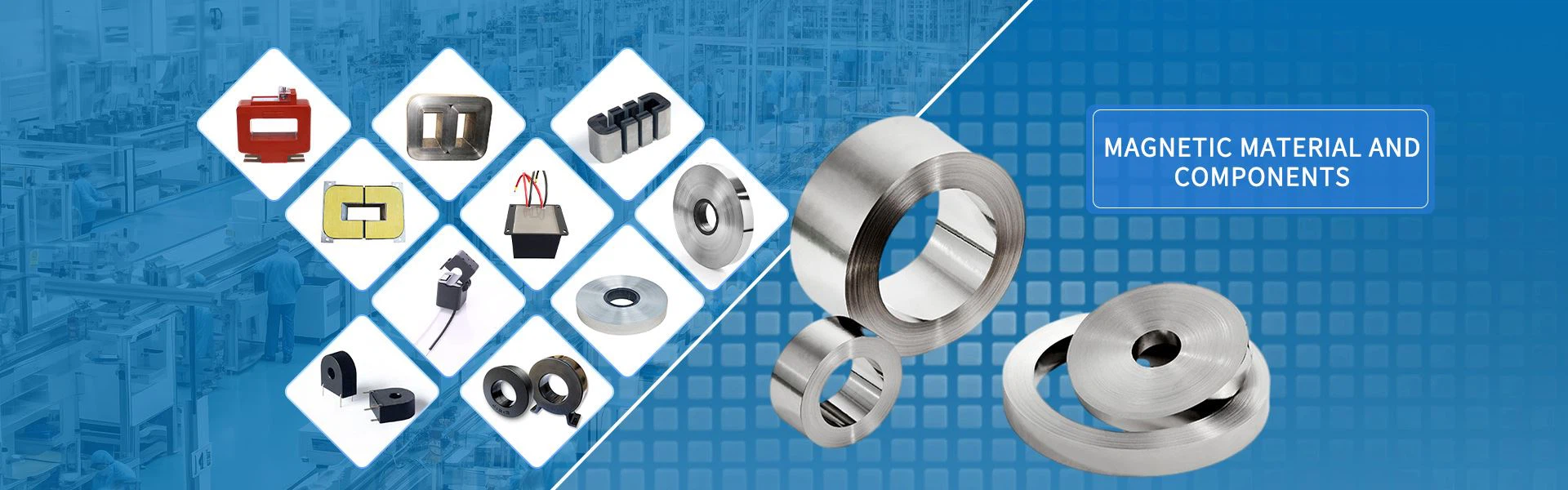
Sunbow Group specializes in the design, development and production of new-type amorphous, nanocrystalline, silicon steel sheets and other magnetic materials and related products. The company's main products include various types of amorphous, nanocrystalline ribbons and high and low voltage current transformer cores, precision current transformer cores, common mode inductor cores, PFC inductor cores, high frequency power transformer cores and related devices.

Customized Solutions

We are at the forefront of a design led approach to delivering challenging and custom solutions for magnetic cores or components for production. Whether your need is simple or complex, we can develop a solution to achieve your goals. With in- house experts we can design, develop and test prototypes that meet performance and environmental requirements of your application.

Advanced Equipment

The company has advanced equipment such as large-scale vacuum smelting furnaces, pressure spraying belts, various magnetic annealing furnaces and close cooperation with domestic scientific research institutions and universities, which ensures the company's R & D ability and product quality.


Complete Qualifications

At present, the company has two production bases, with a number of patented technologies, and has passed ISO9001, IATF16949 quality management system certification. All products have passed ROHS, SGS and other environmental protection certifications.


Wide Range of Applications

The company mainly serves the fields of new energy vehicles, photovoltaic power generation, wind power generation, smart home appliances, smart meters, wireless charging, and various power supplies, inverters, filter inductors, and shielding materials in the national strategic emerging industries.


First 123456 Last 1/6

Introduction of Magnetic Cores
 

A magnetic core is a piece of magnetic material with a high magnetic permeability used to confine and guide magnetic fields in electrical, electromechanical and magnetic devices such as electromagnets, transformers, electric motors, generators, inductors, magnetic recording heads, and magnetic assemblies. It is made of ferromagnetic metal such as iron, or ferrimagnetic compounds such as ferrites. The high permeability, relative to the surrounding air, causes the magnetic field lines to be concentrated in the core material. The magnetic field is often created by a current-carrying coil of wire around the core. The use of a magnetic core can increase the strength of magnetic field in an electromagnetic coil by a factor of several hundred times what it would be without the core. However, magnetic cores have side effects which must be taken into account. In alternating current (AC) devices they cause energy losses, called core losses, due to hysteresis and eddy currents in applications such as transformers and inductors. "Soft" magnetic materials with low coercivity and hysteresis, such as silicon steel, or ferrite, are usually used in cores.


Properties of Magnetic Cores
 

Magnetic cores exhibit certain unique properties that make them well-suited for their role in electronic systems. These properties include hysteresis, saturation, and permeability.

Hysteresis

This is the delay or lag in the magnetic flux in the core for a change in magnetizing force. Hysteresis results in energy loss, which is released as heat, and is a critical consideration in core design.

Saturation

Saturation is the state reached when an increase in applied magnetic field strength does not result in an increase in the induced magnetic flux. Beyond this point, the core cannot carry any more magnetic field.

Permeability

This is the degree of magnetization that a material obtains in response to an applied magnetic field. High permeability is a desirable property in magnetic cores, as it allows for effective transmission of magnetic fields.


Which Materials Can be Used for Transformer Magnetic Core
Electric Meter Brass Terminal
Amorphous Cut Core
Ordinary Copper Terminal
Amorphous Cut Core

Solid Iron
Solid iron cores serve as an excellent pathway to provide magnetic flux and retain high magnetic fields without saturating the iron. However, these cores are not recommended for transformers that operate in AC applications because its magnetic field produces large eddy currents, which in turn produce lots of heat at high frequency.

Carbonyl Iron
Carbonyl iron is a highly pure iron that has stability across a wide range of temperatures and magnetic flux levels. Carbonyl iron powder comprises of micrometer-sized iron spheres coated with a thin insulating layer that reduces the eddy current at high temperature. Often known as RF cores, these carbonyl iron cores have lower losses, but lower permeability too.

Amorphous Steel
Magnetic cores that use amorphous steel are made of many layers of paper-thin metallic tapes that help to reduce the flow of eddy currents. These cores have fewer losses than other magnetic cores, which help them to easily operate at high temperatures as compared to standard lamination stacks. However, amorphous steel is too brittle to be used in motors, which is why they are used in high efficiency transformers that operate at medium frequencies.

Silicon Steel
Silicon steel has high electrical resistivity and offers high saturation flux density. It also has high permeability and low losses, which enables silicon steel cores to be used in high-performance applications. To reduce eddy current losses, most low frequency transformers use laminated cores made of stacks of thin silicon steel to provide current with space only enough to flow through narrow loops between every lamination layer.

Amorphous Metals
Amorphous or vitreous metals are glassy and non-crystalline, thus can be used to create high-efficiency and high-performance transformers. The low conductivity of these materials helps to reduce eddy currents. These amorphous metals can be highly responsive to magnetic fields for low hysteresis losses, and can have low conductivity to reduce eddy current losses.

Ferrite Ceramics
Ferrite ceramics are made from iron oxide and one or multiple metallic elements, which are made in different specifications to meet diverse electrical requirements. Ferrite ceramics magnetic cores are used in high-frequency applications and serve as efficient insulators to prevent eddy currents. However, losses like hysteresis loss can still occur with these ceramics.

Laminated Magnetic Cores
Laminated magnetic cores are made of stacks of thin iron sheets coated with an insulated layer, which lie parallel to the lines of flux. These insulation layers serve as barriers to prevent eddy current so that it can flow only through the narrow loops within each single lamination layer. This technique prevents major of the current from flowing and reduces eddy current to a very low level. Moreover, narrow laminations can reduce power losses to a great extent too. Thus, thinner the laminations, lower the eddy current loss will be.


Applications of Magnetic Cores

Inductors
In inductors, magnetic cores help to store energy in the form of a magnetic field and release it back into the circuit when required. Cores increase the inductance of the coil, improving its energy storage capability and overall performance.

Chokes
Magnetic cores are used in chokes to block high-frequency noise in electronic circuits while allowing low-frequency signals to pass through. This filtering process is essential for reducing electromagnetic interference (EMI) and maintaining the proper functioning of electronic devices.

Transformers

Magnetic cores are critical components in transformers, where they guide the magnetic flux between primary and secondary windings, enabling efficient energy transfer and voltage conversion.

Solenoids

In solenoids, magnetic cores help to concentrate and direct the magnetic field generated by the coil, which results in a stronger force and more efficient linear motion.

Sensors and Actuators

Magnetic cores are also utilized in various sensors and actuators to detect and measure magnetic fields, as well as to produce controlled motion in response to electrical signals.


Nano Core for Power Current Transformer


Specifications of Magnetic Cores

Product specifications for magnetic cores include:
●Permeability
●Saturation
●Core loss
●Materials of construction
Permeability is a measure of a material’s suitability as a path for a flux field. Saturation is the maximum magnetic induction at a given field strength. Core loss is the amount of power lost while the flux field passes through the magnetic core. Possible causes include hysteresis loss, Eddy current loss, and the movement of magnetic domains. Hysteresis losses increase at higher frequencies. Eddy current losses increase at lower core resistances. The normal movement of magnetic fields causes some domains to grow and others to shrink. Both types of changes absorb energy. In terms of materials of construction, most magnetic cores are made of powdered iron or ferrite ceramics. Carbonyl iron is used in broadband inductors for high-power applications. Hydrogen-reduced iron is used in low-frequency chokes for switched-mode power supplies. Ferrite ceramics are designed for high-frequency applications.


Standards of Magnetic Cores

Like other magnetic components, magnetic cores comply with guidelines from the International Electrotechnical Commission (IEC). Technical Committee 51 (TC51) prepares standards for parts and components with magnetic properties, test measurements and methods, and ferrite materials. Magnetic cores that are sold in Europe bear the CE mark to indicate compliance with relevant health and safety regulations.
The purpose of this standard is to present test methods useful in the design, analysis, and operation of magnetic cores in many types of applications in electronics and related industries. Most of the test methods described include specific parameter ranges, instrument accuracies, core sizes, etc., which may be used in the specification of magnetic cores for industrial and military applications. Other sections of the standard describe more generalized test procedures, which are included more for the benefit of the R and D engineer and university student. This standard has been updated to include core materials, test methods, and information on measuring instruments. Information from two discontinued standards is now included. The old standards were IEEE Std 106-1972, Standard Test Procedure for Toroidal Magnetic Amplifier Cores and IEEE Std 164-1962, Methods of Testing Bobbin Cores. SI units are used throughout this standard; equivalent CGS and English units are included in some definitions. Whenever possible, all definitions and symbols are in accordance with those of the International Electrotechnical Commission (IEC).

Permalloy Cores


Types of Magnetic Cores
Switching Power Transformer Cores

Laminated Iron Cores

These cores are made from thin sheets of iron or silicon steel, which are stacked and laminated together. The laminations help to reduce energy losses caused by eddy currents in AC applications. Laminated iron cores are widely used in power transformers and other devices operating at low frequencies.

C Type Cores

Ferrite Cores

Ferrite cores are composed of ceramic magnetic materials, such as iron oxide combined with other metals like manganese, nickel, or zinc. They offer high permeability, low coercivity, and low eddy current losses. These cores are suitable for high-frequency applications, such as switch-mode power supplies, inductors, and transformers.

Leakage Protection Switch Transformer Core

Powdered Iron Cores

Powdered iron cores are made by compressing iron or alloy powders with a binder to create a porous structure. These cores offer high saturation flux density and low eddy current losses. They are commonly used in inductors, chokes, and filters.

C Type Cores

Amorphous and Nanocrystalline Cores

These cores are made from thin ribbons of amorphous or nanocrystalline materials, which exhibit high permeability, low coercivity, and excellent magnetic properties. These cores are ideal for high-frequency applications, such as transformers and inductors, and are known for their energy-saving potential.


Our Certificates


All products have passed ROHS, SGS and other environmental protection certifications.


productcate-749-300productcate-749-300


Our Testing Equipment


productcate-666-357productcate-665-357


Common Problem of Magnetic Cores


Q: What is a magnetic core, and what are its uses in renewable energy generation?

A: A magnetic core is a material with high magnetic permeability used in electromagnets, transformers, inductors, and many other electrical devices. It is made of ferromagnetic metal such as iron or ferrimagnetic compounds such as ferrites. The permeability of a magnetic core determines the amount of flux that can be stored in it. The higher the permeability, the more flux that can be stored. Magnetic cores are used in many renewable energy generation devices, such as wind turbines and solar panels. They help to increase the efficiency of these devices by improving the flow of electricity through them. In wind turbines, for example, the magnetic core helps to increase the rotational speed of the blades, which in turn generates more electricity. Solar panels use magnetic cores to convert electrons into usable energy. Magnetic cores are essential to many renewable energy generation devices and help improve their efficiency. Without them, these devices would not be able to generate as much electricity as they do.

Q: How does a magnetic core help to improve the efficiency of renewable energy systems?

A: Using magnetic cores in renewable energy systems can help improve their efficiency. Magnetic cores can increase the strength of magnetic fields, which can help increase the amount of power a system can generate. Additionally, magnetic cores can also help to reduce losses due to resistance, which can further improve the efficiency of a system. As such, using magnetic cores can help significantly improve the overall efficiency of renewable energy systems.

Q: What are the benefits of using magnetic cores in renewable energy systems?

A: Renewable energy systems, such as wind turbines and solar panels, are becoming increasingly popular as a way to generate electricity. One of the challenges with these types of systems is that they can be less efficient than traditional power plants. One way to improve the efficiency of renewable energy systems is to use magnetic cores. Magnetic cores are devices that help guide and control magnetic fields. They are often used in electrical motors and generators. Magnetic cores can be used in renewable energy systems to help improve the system’s efficiency. For example, they can be used to improve the efficiency of wind turbines. Magnetic cores can also be used to improve the efficiency of solar panels.

Q: What is the core for magnets?

A: An iron core, also called a magnetic core or magnetic core, is a component for producing inductance, a property that has electrical circuits or components such as coils. It is therefore also used in transformers. Electromagnetic induction causes an electric field by changing the magnetic flux density.

Q: Why do we need magnetic core?

A: Magnetic cores are devices that help guide and control magnetic fields. They are often used in electrical motors and generators. Magnetic cores can be used in renewable energy systems to help improve the system's efficiency. For example, they can be used to improve the efficiency of wind turbines.

Q: Which core is magnetic?

A: Scientists know that today the Earth's magnetic field is powered by the solidification of the planet's liquid iron core. The cooling and crystallization of the core stirs up the surrounding liquid iron, creating powerful electric currents that generate a magnetic field stretching far out into space.

Q: What are the 3 types of magnetic core materials?

A: Magnetic cores are made of three basic materials. The first is bulk metal, the second is powdered materials, and the third is ferrite material.

Q: How do magnetic cores work?

A: Core relies on the square hysteresis loop properties of the ferrite material used to make the toroids. An electric current in a wire that passes through a core creates a magnetic field. Only a magnetic field greater than a certain intensity ("select") can cause the core to change its magnetic polarity.

Q: What is the best magnetic core?

A: The best core material for a high-power electromagnet is typically a material with high magnetic permeability, such as iron, cobalt, or nickel. These materials allow for strong magnetic fields to be generated when an electrical current is passed through the coil.

Q: What are the characteristics of a magnetic core?

A: The core is typically made of a ferromagnetic material like iron or of ferrimagnetic compounds such as ferrites. The idea behind using high permeability material for this purpose is to be able to have the magnetic field lines concentrated in the core material.

Q: Why is iron used as magnetic core?

A: Key points. Iron is easily magnetised and demagnetised. Steel is more difficult to magnetise and is not easily demagnetised. An iron core makes a temporary electromagnet.

Q: What is the difference between magnetic core and semiconductor?

A: Magnetic core Memory is non volatile (doesn't not lose data when power goes OFF). Semi conductor memory is faster, economical, smaller in size and lighter, but magnetic memories are slower compared to that.

Q: What steel is used for magnetic core?

A: The best steel grade for making an electromagnet core is typically a high-permeability material such as soft iron or silicon steel. These materials are able to concentrate magnetic flux effectively, making them suitable for electromagnet cores.

Q: Why are magnetic cores laminated?

A: Traditionally, to reduce the effects of eddy currents and hysteresis losses in electrical machines, the magnetic cores are assembled with laminations of magnetic steel alloyed with silicon.

Q: What is the strongest magnetic material in the world?

A: Neodymium magnets are rare-earth magnet materials with the highest magnetic properties. Composed of neodymium, iron & boron, these strong permanent magnets are the most powerful class of magnet materials commercially available today.

Q: Does the core control the magnetic field?

A: The magnetic field is thought to arise according to the so-called geodynamo model: the molten core's movement gives rise to electric currents that in turn produce the magnetism of Earth. In a hunk of ferromagnetic material like iron you have magnetic domains.

Q: What is the function of the magnetic core?

A: The fundamental purpose of any magnetic core is to provide an easy path for flux in order to facilitate flux linkage, or coupling, between two or more mag- netic elements.

Q: What type of core is best for electromagnets?

A: The most suitable material to be used as the core of an electromagnet is soft iron and it has high permeability but its availability and cost makes it uneconomical.

Q: Where are magnetic cores used?

A: They are used mostly for electromagnetic interference filters and low-frequency chokes, mainly in switched-mode power supplies. Hydrogen-reduced iron cores are often called "power cores".

Q: What are the applications of magnetic core?

A: Magnetic cores play a vital role in the functionality of various electromagnetic devices, including transformers, inductors, and solenoids. Comprising ferromagnetic materials, these cores help to increase the efficiency and performance of such devices by providing a concentrated path for magnetic flux.

We're professional magnetic cores manufacturers and suppliers in China, specialized in providing high quality customized service. We warmly welcome you to buy magnetic cores made in China here from our factory.

Nano Ribbon 1K107, Plug in Copper Terminal, switching power supply transformer

(0/10)

clearall