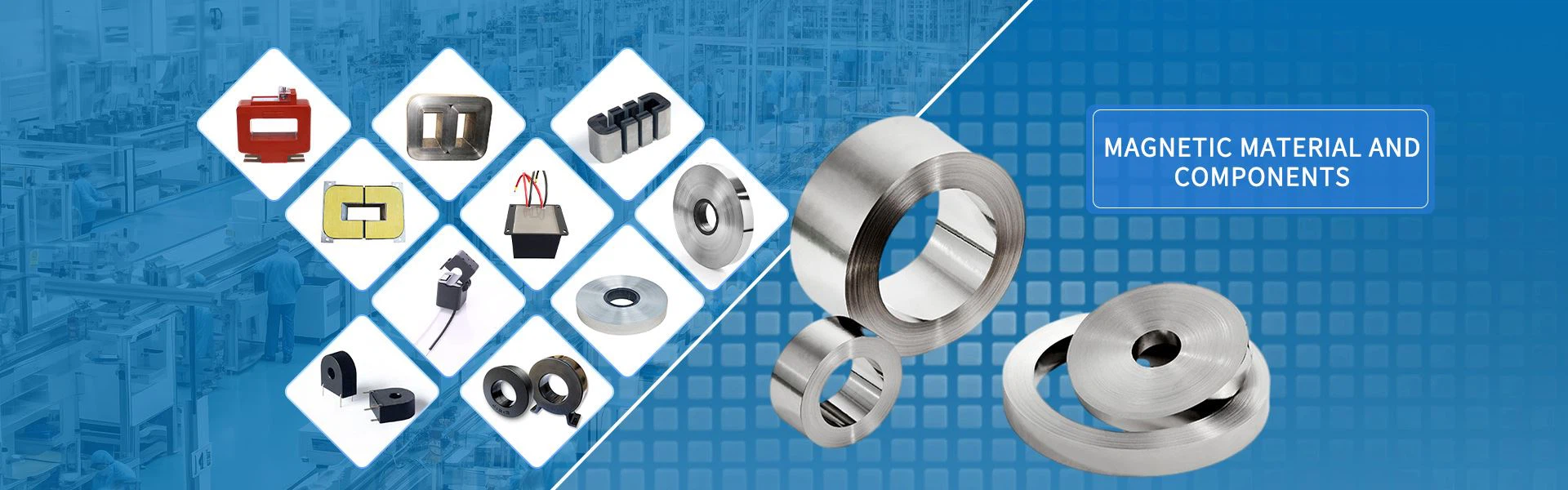
Magnetic Components

Your Professional Magnetic Components Manufacturer in China

Sunbow Group specializes in the design, development and production of new-type amorphous, nanocrystalline, silicon steel sheets and other magnetic materials and related products. The company's main products include various types of amorphous, nanocrystalline ribbons and high and low voltage current transformer cores, precision current transformer cores, common mode inductor cores, PFC inductor cores, high frequency power transformer cores and related devices.

Customized Solutions

We are at the forefront of a design led approach to delivering challenging and custom solutions for magnetic cores or components for production. Whether your need is simple or complex, we can develop a solution to achieve your goals. With in- house experts we can design, develop and test prototypes that meet performance and environmental requirements of your application.

Advanced Equipment

The company has advanced equipment such as large-scale vacuum smelting furnaces, pressure spraying belts, various magnetic annealing furnaces and close cooperation with domestic scientific research institutions and universities, which ensures the company's R & D ability and product quality.


Complete Qualifications

At present, the company has two production bases, with a number of patented technologies, and has passed ISO9001, IATF16949 quality management system certification. All products have passed ROHS, SGS and other environmental protection certifications.


Wide Range of Applications

The company mainly serves the fields of new energy vehicles, photovoltaic power generation, wind power generation, smart home appliances, smart meters, wireless charging, and various power supplies, inverters, filter inductors, and shielding materials in the national strategic emerging industries.


Introduction of Magnetic Components
 

Magnetic components are passive elements that rely on an internal magnetic field to alter electrical current. They play a critical role in many electronic devices, equipment, and systems. They are used for the control, transfer, and conditioning of electric power. Magnetics are essential components in power topologies but they are perhaps the least understood and often deferred until the very end of the design. With basic knowledge about the functions magnetics perform, engineers can better understand how to select the appropriate components to optimise for power performance. This understanding is critical regardless of the application. Magnetics are passive components which use an internal magnetic field to change the phase of electrical current.


Benefits of Magnetic Components
 

Increased Mechanical Strength
One often overlooked consideration is the inherently brittle composition of magnet alloys. Magnets exposed to repetitive mechanical stresses can suffer volume loss. If a portion of the magnet chips away from the main body, the resulting volume loss can lead to a deterioration of the magnetic field. To combat this state, we can combine or integrate magnets with non-magnetic components (e.g., ferrous metals, non-ferrous metals, and plastics) that create a protective barrier or housing that prevents volume loss. Some common examples of magnetic assemblies include rail magnets, channel magnets, and pot magnets.


Increased Magnetic Strength
In addition to increased mechanical strength, the use of a magnet assembly can increase magnetic strength. Magnetic assemblies typically have higher magnet force when compared to a raw magnet because the flux conducting elements found in the assembly are an integral part of the magnetic circuit. These elements, by the use of magnetic induction, enhance and focus the assembly’s field on the region of interest. This technique works best when using the magnetic assembly in direct contact with a work-piece where even the smallest gaps can dramatically impact the magnetic field. These gaps can be an actual air-gap or any coating or debris which stands the assembly off of the work-piece.


Mounting and Special Design Features
Magnetic assemblies can be integrated by a variety of methods, and most are mechanical. The most common are press-fitting (interference) and by the use of a mechanical fastener. The press-fit assemblies will typically utilize a brass sleeve which is centerless-ground for insertion into a bore. Mechanical fastener mounting will make use of an incorporated tapped or through hole in the assembly. We can also tap holes in the housing material whereas this is not possible when using a plain magnet.


Manufacturing Methods
Magnet assembly manufacturing methods are as diverse as the materials and magnetic alloys used in them. Magnets can be pressed into soft metals such as brass or secured to non-magnetic components with industrial adhesives.


What Industries Use Magnetic Components

Appliances
Magnetic components play critical roles in both common household and advanced industrial appliances (ranging from refrigerators to telecommunication devices), particularly when it comes to converting AC to DC as well as power line filtering.


Automotive
Magnetics are found throughout cars, regulating voltage in power supplies for climate control, dashboard display, interior and exterior lighting, and other systems. The advent of electric and hybrid vehicles has increased the range of applications for magnetics in the automotive industry.

Communications

Magnetic components are used for both low-voltage and high-voltage communication systems, such as radio frequency circuitry in cellphones or conductors in high-voltage transmission systems. Larger transformers are also critical to the telecom infrastructure.

Computers and Electronics

Many types of magnetics components are found in computers and other personal electronic devices. By selecting optimal components, manufacturers can increase power efficiency, and in certain cases can decrease size.

Defense

The defense industry’s demand for magnetic components has expanded as surveillance equipment, transport vehicles, and weaponry have become more and more advanced.


Main Types of Magnetic Components and Their Applications
Plug-in Copper Terminal

Inductors

An inductor is used to slow down the surges in a current by adding resistance. Some applications include:
●Storing and transferring voltage in power converters.
●Choking, blocking, attenuating, or filtering electrical circuit noise.
●Creating LC circuits or tuned oscillators.
Some common inductors industries often use include:
●Common mode choke inductors: These highly efficient inductors are used to eliminate AC line-conducted common-mode noise when switching power supplies/power supply circuits.
●Input inductors: When handled correctly, an input inductor can provide a low AC ripple current for inputs when switching power supplies-a function that’s useful across many industries.
●Low pass filter inductor: For filtering EMI interference while minimizing signal loss, a Low Pass Filter Inductor is an excellent choice and is the most recommended when dealing with a circuit that has different voltages.
●Toroid inductors and choke inductors: These types of inductors are used in many electronics, including medical supplies, manufacturing equipment, test equipment, and power supplies.

Transformers

The main role of a transformer is to either increase or decrease voltage levels while stabilizing a circuit’s voltage level. Transformers consist of three major components: a primary coil, a secondary coil, and a core. Just like inductors, there are different types of transformers:
●Flyback: Flyback transformers are in many devices such as computers, electrical pumps, PoE motors, converters and inverters, and AC-DC power supplies.
●Audio transformers: The purpose of audio transformers is to modify signals between different audio applications for a much better overall sound quality. They do this by matching the impedance and voltage of their respective input and output sources.
●Isolation transformers: Isolation transformers are used to isolate electrical devices from their supply line. Due to this unique capability, medical industries often use isolation transformers because they have smaller power losses, can reduce shock administered to a patient, and are compact.
●Power transformers: These types of transformers are often called electrical power transformers and have a wide range of uses. Uses often include induction heating, inverters, having an unregulated power supply, and traction motion control.

Low-Voltage Current Transformer
Current Transformer for Electricity Meter

Coils

Coils are often used in conjunction with other custom magnetic parts like transformers. A magnetic coil is made from material typically like copper that winds around a cylindrical or toroidal-shaped core. The purpose of a coil is to transmit heat, electricity, or sound. They are used in major industries, including the following:
●Medical
●Electronics
●Telecommunications
●Aerospace and defense
●Automotive
●Commercial manufacturing
Different types of coils include:
●Universal coil windings are commonly used in transformers where high voltage power is needed.
●Copper foil coil is a reliable material used for many applications across medical, electronic, industrial, and aerospace industries.
●Trapezoidal coil is an innovative coil that follows the same principles as the Helmholtz coil and has recently been used to destroy cancer cells.


Advantages of Inductors

Energy Storage
Inductors store energy in a magnetic field, facilitating efficient energy transfer in applications like transformers.

Filtering
Used in electronic circuits to filter out high-frequency noise or unwanted signals.

Inductive Coupling

Enables wireless communication and data transfer.

Stability

Inductors resist rapid changes in current, contributing to the stability of electronic circuits.

Variable Inductance

Some types of inductors allow for variable inductance, providing flexibility in circuit design.


Types of Inductor
 

Inductors come in various types tailored for specific applications:

Air Core Inductors

Coils without a magnetic core, used in radio frequency applications.

Choke Coils

Inductors designed for blocking high-frequency alternating current in power supply lines.

Variable Inductors

With adjustable cores, allowing for variable inductance.

Ferrite Core Inductors

Employing ferrite material for increased inductance efficiency, common in power applications.

Toroidal Inductors

Circular coils wound around a donut-shaped core, providing compact and efficient energy storage.

Iron Core Inductors

Coils wound around an iron core, enhancing inductance for applications like transformers.


Inductors Have Different Names Depending on Their Use


Inductors are used in a variety of places in our daily lives. Depending on the application, they are called coils, choke, reactors, solenoids, line filters, etc., as in the case of transformers. The following is a list of typical names.

Choke Coil
An inductor mainly used in power supply circuits is called a choke coil. It is used to adjust AC current to unidirectional current and to remove noise.


Common Mode Filter
A common mode filter is characterized by the shape of two choke coils integrated together and is used to remove noise in digital interfaces such as USB and HDMI.


Toroidal Coil
A coil with a donut-shaped ferromagnetic core is called a toroidal coil. Unlike coils with rod-shaped cores, the magnetic flux in the winding leaks less to the outside. Therefore, it is highly stable and reproducible and often used in high-frequency circuits.


Materials Used in Magnetic Components
 

When it comes to the materials used for creating magnetic assemblies, the choices are vast. The selection of materials largely depends on the desired magnetic properties, the operating environment, and the specific application requirements.

Neodymium Iron Boron (NdFeB)

This is the most potent commercially available magnet material, offering high performance even in small sizes. However, it is less resistant to corrosion and high temperatures.

Alnico

Comprising aluminum, nickel, and cobalt, Alnico magnets are highly resistant to high temperatures and corrosion. They offer moderate magnetic strength.

SmCo (Samarium Cobalt)

Though expensive, SmCo provides high magnetic strength and excellent temperature stability, making it suitable for demanding applications.


Our Certificates


All products have passed ROHS, SGS and other environmental protection certifications.


productcate-749-300productcate-749-300


Our Testing Equipment


productcate-666-357productcate-665-357


Common Problem of Magnetic Components


Q: What are the components of the magnetic field?

A: There are three components that are responsible for the magnitude as well as the direction of the earth's magnetic field: Magnetic declination. Magnetic inclination or the angle of dip. Horizontal component of the earth's magnetic field.

Q: What are the magnetic elements?

A: Since then only three elements on the periodic table have been found to be ferromagnetic at room temperature-iron (Fe), cobalt (Co), and nickel (Ni). The rare earth element gadolinium (Gd) nearly misses by only 8 degrees Celsius.

Q: What are the components of a natural magnet?

A: A natural magnet is an ore of iron that attracts small pieces of iron, cobalt, and nickel towards it. It is usually an oxide of iron named Fe3O4. Magnetite or lodestone is a natural magnet.

Q: What are the components that make up the magnetic circuit?

A: A magnetic circuit is made up of one or more closed loop paths containing a magnetic flux. The flux is usually generated by permanent magnets or electromagnets and confined to the path by magnetic cores consisting of ferromagnetic materials like iron, although there may be air gaps or other materials in the path.

Q: What are the properties of magnetic materials?

A: Magnetic properties of materials is one of the most essential concepts of physics. The magnetic properties are Ferromagnetism (they form a magnet), Paramagnetism (They are attracted towards the magnetic field), Diamagnetism (They are repelled from the magnetic field).

Q: What are the benefits of magnetic materials?

A: Nanoscale magnetic materials possess the advantages of the possibility of synthesis in a wide range of size of 10–100nm with a defined structure for a particular application as well as exploiting by the external magnetic force.

Q: What are 3 types of amorphous?

A: Amorphous solid, any noncrystalline solid in which the atoms and molecules are not organized in a definite lattice pattern. Such solids include glass, plastic, and gel. Solids and liquids are both forms of condensed matter; both are composed of atoms in close proximity to each other.

Q: What are examples of amorphous materials?

A: Plastics, glass, rubber, metallic glass, polymers, gel, fused silica, pitch tar, thin layer lubricants, and wax are examples of amorphous solids.

Q: What is an amorphous core transformer?

A: An amorphous metal transformer (AMT) is a type of energy efficient transformer found on electric grids. The magnetic core of this transformer is made with a ferromagnetic amorphous metal.

Q: What is amorphous magnetic materials?

A: The amorphous soft magnetic materials in general are alloys of the ferromagnetic metals as Fe, Co, Ni with the additions B, P, C, Si to amorphousize the alloys which additionally were alloyed by the transition groups elements as V, Nb, Ta, Cr, Mo and Mn.

Q: How many types of amorphous are there?

A: An amorphous solid is any non-crystalline solid that does not organize the atoms and molecules in a definite lattice pattern. There are glass, plastic, and gel solids which come under the category of amorphous solid.

Q: How do you know if a material is amorphous?

A: Amorphous solids have no defined shapes and cannot be cooled rapidly. In fact, rapid cooling of amorphous materials can cause them to become glass. This property can result in an amorphous material with poor-defined shapes and low density. If the cooling rate is too fast, the material will turn into a liquid.

Q: Is plastic a amorphous material?

A: Plastic can exist in both amorphous and crystalline forms, depending on its molecular structure.

Q: Which metal is amorphous?

A: Amorphous metals can be grouped in two categories, as either non-ferromagnetic, if they are composed of Ln, Mg, Zr, Ti, Pd, Ca, Cu, Pt and Au, or ferromagnetic alloys, if they are composed of Fe, Co, and Ni. Thermal conductivity of amorphous materials is lower than that of crystalline metal.

Q: What is the use of amorphous core transformer?

A: Amorphous core transformers play an important role in reducing no-load losses Amorphous metal core transformers improve electrical power distribution efficiency by reducing transformer core losses.

Q: What are the advantages of amorphous core transformer?

A: An amorphous core in a transformer has several advantages and disadvantages. Advantages: Reduced core loss: The amorphous core has a lower hysteresis loss and eddy current loss, which results in a reduction in core loss. Efficiency improvement: The reduced core loss leads to an increase in the transformer's efficiency.

Q: How does amorphous metal transformer work?

A: Amorphous Metal Transformer is a power transformer with low loss and high energy efficiency. This kind of transformer uses iron based amorphous metal as the core. Because this material does not have a long range ordered structure, its magnetization and demagnetization are easier than ordinary magnetic materials.

Q: What is an amorphous material?

A: Amorphous material is one kind of nonequilibrium material; its characteristic of atomic arrangement is more like liquid and has no long-range periodicity. The glass-forming ability of an alloy is closely related to its composition, and is quite different in various alloys.

Q: What are amorphous materials called?

A: The terms "glass" and "glassy solid" are sometimes used synonymously with amorphous solid; however, these terms refer specifically to amorphous materials that undergo a glass transition. Examples of amorphous solids include glasses, metallic glasses, and certain types of plastics and polymers.

Q: What are the electrical properties of amorphous materials?

A: Owing to their structural disorder, amorphous materials often have lower conductivities than their crystalline counterparts. Amorphous metals are often electrically conductive, but other amorphous materials, e.g. oxides, are usually insulators or semiconductors.

Q: What can you use inductors for?

A: It’s not that common to see discrete inductors in the typical example circuits for beginners. So if you’re just starting out, you probably won’t come across them just yet. But they are very common in power supplies. For example, to create a buck or boost converter. And they are common in radio circuits to create oscillators and filters. What you will come across much more often though, is electromagnets. And they are basically inductors. You’ll find them in almost everything that moves from electricity. Like relays, motors, solenoids, speakers, and more. And a transformer is basically two inductors wound around the same core.

Q: What is an inductor (coil)?

A: Inductors are called passive components, the same as resistors (R) and capacitors (C), and are electronic components labeled with an "L". It has the function of keeping the current constant. The ability of an inductor is expressed by "inductance". The unit is Henry (H). An inductor has the same structure as a coil, but most inductors called inductors have a single winding (1 roll). Some are wound only with conductors, while others have a core inside the wound conductors. The action of an inductor is proportional to the square of the number of turns or radius and inversely proportional to the length.

Q: What happens when you disconnect the inductor?

A: The inductor also resists the current from switching off instantly. The current won’t just stop flowing in the inductor in an instant. So when you switch off the power, the inductor will try to continue the current flow. It does this by quickly increasing the voltage across its terminals. It actually increases so much that you can get a little spark across the pins of your switch!

We're professional magnetic components manufacturers and suppliers in China, specialized in providing high quality customized service. We warmly welcome you to buy magnetic components made in China here from our factory.

Iron Based Amorphous Metal Block Core, silicon iron core transformer, Co based amorphous ribbon

(0/10)

clearall