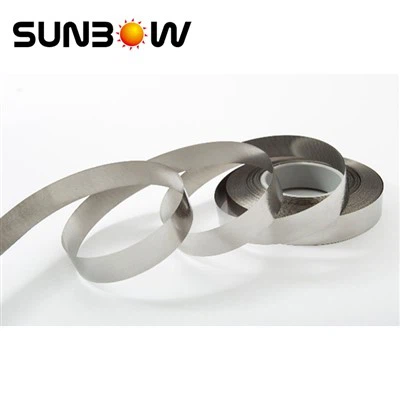
Nanocrystalline Material

Your Professional Nanocrystalline Material Manufacturer in China

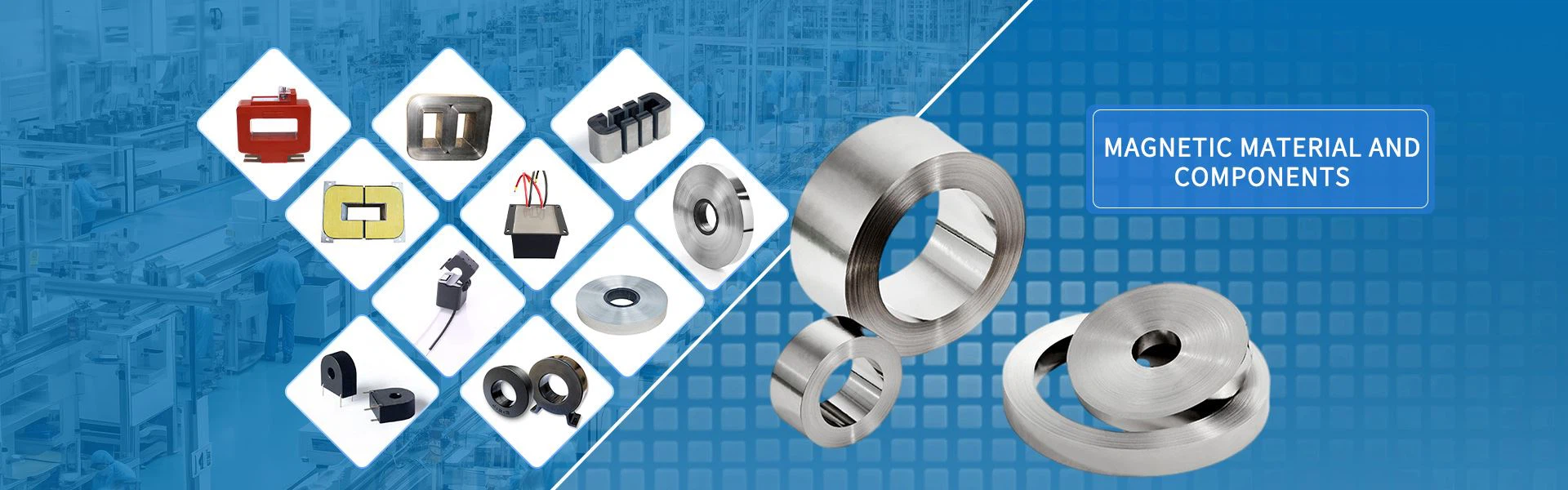
Sunbow Group specializes in the design, development and production of new-type amorphous, nanocrystalline, silicon steel sheets and other magnetic materials and related products. The company's main products include various types of amorphous, nanocrystalline ribbons and high and low voltage current transformer cores, precision current transformer cores, common mode inductor cores, PFC inductor cores, high frequency power transformer cores and related devices.

Customized Solutions

We are at the forefront of a design led approach to delivering challenging and custom solutions for magnetic cores or components for production. Whether your need is simple or complex, we can develop a solution to achieve your goals. With in- house experts we can design, develop and test prototypes that meet performance and environmental requirements of your application.

Advanced Equipment

The company has advanced equipment such as large-scale vacuum smelting furnaces, pressure spraying belts, various magnetic annealing furnaces and close cooperation with domestic scientific research institutions and universities, which ensures the company's R & D ability and product quality.


Complete Qualifications

At present, the company has two production bases, with a number of patented technologies, and has passed ISO9001, IATF16949 quality management system certification. All products have passed ROHS, SGS and other environmental protection certifications.


Wide Range of Applications

The company mainly serves the fields of new energy vehicles, photovoltaic power generation, wind power generation, smart home appliances, smart meters, wireless charging, and various power supplies, inverters, filter inductors, and shielding materials in the national strategic emerging industries.


Introduction of Nanocrystalline Material
 

A nanocrystalline (NC) material is a polycrystalline material with a crystallite size of only a few nanometers. These materials fill the gap between amorphous materials without any long range order and conventional coarse-grained materials. Definitions vary, but nanocrystalline material is commonly defined as a crystallite (grain) size below 100 nm. Grain sizes from 100 to 500 nm are typically considered "ultrafine" grains.


Mechanical Properties


Nanocrystalline materials show exceptional mechanical properties relative to their coarse-grained varieties. Because the volume fraction of grain boundaries in nanocrystalline materials can be as large as 30%, the mechanical properties of nanocrystalline materials are significantly influenced by this amorphous grain boundary phase. For example, the elastic modulus has been shown to decrease by 30% for nanocrystalline metals and more than 50% for nanocrystalline ionic materials. This is because the amorphous grain boundary regions are less dense than the crystalline grains, and thus have a larger volume per atom, Ω \Omega . Assuming the interatomic potential, U ( Ω ) {\displaystyle U(\Omega )}, is the same within the grain boundaries as in the bulk grains, the elastic modulus, E ∝ ∂ 2 U / ∂ Ω 2 {\displaystyle E\propto \partial ^ U/\partial \Omega ^ }, will be smaller in the grain boundary regions than in the bulk grains. Thus, via the rule of mixtures, a nanocrystalline material will have a lower elastic modulus than its bulk crystalline form.


Characteristics

High permeability: Increasing inductance and reducing winding turns.

High saturation induction: Minimizing size of component.

High frequency: Suitable used in frequency range from 50hz up to 100khz.

High curie temperature: Higher working temperature, continuous working at up to 120℃.

low coercivity: Increasing the efficiency and reducing hysteresis loss.

low core loss: Reducing energy consumed and minimizing temperature rise.

low magnetostriction: Low audible noise compared to traditional magnetic materials.

Excellent thermal stability: Extremely small deviations from -20℃ to 120℃.

low cost: Good choice to replace traditional materials like permalloy.


Iron-based Amorphous Alloy Ribbon


Why Use Nanocrystalline Material

Nanocrystalline solids are polycrystals the crystal size of which is a few (typically 1 to 10) nanometers so that 50% or more of the solid consists of incoherent interfaces between crystals of different crystallographic orientations. Materials consisting primarily of internal interfaces represent a separate state of solid matter because the atomic arrangements formed in the cores of interfaces are known to be arrangements of minimum energy in the potentials field of the adjacent crystal lattices. The boundary conditions imposed on the atoms in the interfacial cores by the adjacent crystal lattices, result in atomic structures in the interfacial cores which cannot be formed elsewhere (e.g. in glasses or perfect crystals). Nanocrystalline materials seem to be of interest for the following four reasons:
●Nanocrystalline materials exhibit atomic structures which differ from the two known solid state structures: the crystalline and the glassy state.
●The properties of nanocrystalline materials differ (in some cases by several orders of magnitude) from those of glasses and/or crystals with the same chemical composition.
●Nanocrystalline materials seem to permit the alloying of conventionally insoluble components.
●If small (1 to 10 nm diameter) glassy droplets are consolidated (instead of small crystals), a new type of glasses, called nanoglasses, is obtained. Such glasses seem to differ structurally from glasses generated by rapid solidification.


Advantages of nanocrystalline material


Nanocrystalline is a soft magnetic material composed of 82% iron which has been dubbed the future of magnetic materials in power electronics. Higher permeability means lower loss transformers, which can translate to large reductions in size and weight.

Lower Losses, Smaller Size and Reduced Weight
The losses of a Nanocrystalline core can be up to two-thirds less than an equivalent Nickel Supermalloy core and up to 80% less than for toroid geometries. Less power is dissipated by the transformer (or inductor) and means the size of cooling components can be reduced.

Ease of Switch Over From Other Materials
Nanocrystalline can be formed into any shape and therefore offers a drop-in replacement for existing cores manufactured from other materials, such as Supermalloy or ferrite.

Nanocrystalline v Supermalloy
Nanocrystalline material is more suitable than Supermalloy in applications such as high frequency/broadband transformers, broadband current sensors, high frequency filter chokes and pulse transformers because nanocrystalline offers:
●High permeability over a broad frequency range
●High saturation flux density
●Low losses

Soft Magnetic Cores
We can supply tape-wound soft magnetic cores from a range of materials, including grain-oriented silicon steels, 50% and 80% nickel alloys, amorphous material, cobalt alloys and nanocrystalline. Cores up to 1.8m x 1.8m / 1800Kg and strip widths up to 0.6m are possible.

Enhanced Electrical Conductivity
Nanocrystalline materials have shown remarkable improvements in electrical conductivity compared to their bulk counterparts. The smaller grain size of these materials facilitates electron transport, reducing resistivity and improving overall device performance.

Improved Magnetic Properties
Nanocrystalline metals exhibit enhanced magnetic properties, making them highly suitable for applications in magnetic sensors, transformers, and inductors. The superior magnetic characteristics of nanocrystalline materials have opened avenues for more efficient and compact electronic devices.

Enhanced Mechanical Strength
Despite their reduced grain size, nanocrystalline materials can possess exceptional mechanical strength. This makes them attractive for applications where both strength and miniaturization are crucial factors, such as microelectromechanical systems (MEMS) and nanoelectromechanical systems (NEMS).

Improved Energy Storage
Nanocrystalline materials have shown promising potential for energy storage applications, particularly in batteries and supercapacitors. Their high surface area and shortened pathways for ionic transport enable faster charging and higher energy density, addressing the increasing demand for portable and sustainable energy solutions.


Benefits of Healthcare Nanocrystalline Materials


Precise Drug Delivery

Nanocrystals can be loaded with therapeutics and targeted directly to diseased cells or tissues. This precision helps reduce side effects and enhances the effectiveness of treatments.

01

Improved Diagnostic Accuracy

Nanoparticles can act as contrast agents, enhancing imaging techniques such as MRI, CT scans, and X-rays. This enables better visualization of internal structures and early detection of diseases.

02

Enhanced Antimicrobial Therapies

Nanocrystalline materials can be functionalized to deliver antimicrobial agents directly to bacteria or viruses, offering a more efficient approach to combat infections.

03

Promoting Tissue Regeneration

Nanomaterials provide a scaffold for tissue growth and can be used to stimulate regeneration in damaged tissues, aiding in wound healing and tissue repair.

04

Personalized Medicine

The highly customizable nature of nanocrystalline materials allows for tailoring treatments to individual patient needs, improving treatment outcomes and patient satisfaction.

05


Key Applications of Nanocrystalline Materials in Healthcare


The potential applications of nanocrystalline materials in healthcare are vast. Here are some key areas where these materials are making significant strides:

1

Drug Delivery Systems: Nanoparticles are being used to encapsulate and target drugs to specific sites, enhancing their efficacy and reducing side effects.

2

Cancer Treatment: Nanoparticles can carry chemotherapy drugs directly to tumor cells, minimizing damage to healthy tissues and improving the effectiveness of treatment.

3

Biosensors: Nanocrystals incorporated into biosensors enable rapid and sensitive detection of biomarkers, aiding in disease diagnosis and monitoring.

4

Regenerative Medicine: Nanomaterials are utilized in tissue engineering to create scaffolds that promote cell growth and tissue regeneration.

5

Antimicrobial Coatings: Nanoparticles can be incorporated into coatings to prevent infections in medical devices and implants.


Processing for Nanocrystalline Material

Synthesis of nanocrystalline raw materials in the form of foils, powders, and wires is relatively straightforward, but nanocrystalline raw materials tend to become rough when exposed to high temperatures for extended periods of time, so low temperatures are required to integrate these raw materials into bulk. A rapid densification technique is required. component. Various techniques such as spark plasma sintering and ultrasonic additive manufacturing show promise in this regard, but the synthesis of bulk nanocrystalline components on a commercial scale remains unfeasible.

Nanocrystalline Ribbon 1K107


What is the Difference Between Nanocrystalline and Polycrystalline
productcate-398-260
 

Nanocrystalline

Nanocrystalline materials are those that contain crystal grains having the dimensions in the nanometer scale. These materials tend to fill the gap between amorphous materials, so these crystal grains are arranged without a long range order. Therefore, nanocrystalline materials are conventional coarse-grained materials. Generally, there are slightly different definitions of nanocrystalline materials. However, a material containing crystal grains with dimensions below 100 nm are typically considered as nanocrystalline materials. Moreover, crystal grains having dimensions between 100 to 500 nm are called as “ultrafine” grains. We can abbreviate nanocrystalline materials as NC.
X-ray diffraction is the major technique we use to measure the crystal grain size of the NC material. Materials with very small crystal grains show broadened diffraction peaks. This broad peaks can be used to determine the grain size using the Scherrer equation and Williamson-Hall plot. Or else, we can use more sophisticated methods such as the Warren-Averbach method or computer modelling of the diffraction pattern.
When considering the synthesis of NC material, there are several ways. These techniques are based on the phase of matter. For example, there are some techniques for NC production such as solid-state processing, liquid processing, vapour-phase processing, and solution processing.

productcate-397-261
 

Polycrystalline

Polycrystalline materials are those that contain crystal grains having dimensions above the nanometer scale. These materials form mainly upon cooling. The crystal grains in polycrystalline materials are called “crystallites”. The orientation of these crystallites in a material is usually random with no particular direction, random texture, etc. We can abbreviate polycrystalline materials as PC.
Most organic solids we know are polycrystalline materials. Some common examples include ceramics, rock, ice, etc. The degree of crystallization in PC material is important in determining the properties of these materials. For example, sulfur can be found in different allotropic forms where these allotropes have different properties according to the degree of crystallinity.
The size of a crystallite can be measured using X-ray diffraction technique. The grain size can also be determined using other methods such as transmission electron microscopy. Sometimes, materials contain a large single crystallite which can easily be handled.

productcate-399-246
 

Difference

Materials we know can be divided into different classes depending on the particle size or by looking at the crystal grains. Nanocrystalline material and polycrystalline material are such two classes. Materials containing crystal grains with dimensions below 100 nm are typically considered as nanocrystalline materials while materials containing crystal grains with dimensions above 100 nm are typically considered as polycrystalline materials. Therefore, the key difference between nanocrystalline and polycrystalline is that nanocrystalline materials are made of particles in nanometer-scale whereas polycrystalline materials are made of large particles.


Our Certificates


All products have passed ROHS, SGS and other environmental protection certifications.


productcate-749-300productcate-749-300


Our Testing Equipment


productcate-666-357productcate-665-357


Common Problem of Nanocrystalline Material


Q: What are the properties of nanocrystalline materials?

A: Nanocrystalline materials exhibit increased strength/hardness, enhanced diffusivity, improved ductility/toughness, reduced density, reduced elastic modulus, higher electrical resistivity, increased specific heat, higher thermal expansion coefficient, lower thermal conductivity, and superior soft magnetic properties in comparison to conventional coarse-grained materials.

Q: What is the structure of a nanocrystalline material?

A: Nanocrystalline materials are single- or multiphase polycrystals with crystallite sizes in the range of a few nm (typically 5–20 nm), so that about 30 vol% of the material consists of grain or interphase boundaries. Due to the huge amount of grain boundaries and/or the broad distribution of interatomic spacings in the grain boundaries the properties of nanocrystalline materials differ from that of crystalline and amorphous materials with the same chemical composition. Nanocrystalline materials seem to permit the alloying of conventionally insoluble components.

Q: Why are nanocrystalline materials stronger?

A: The increase in yield strength is a result of enhanced fraction of grain boundary, which impedes the motion of dislocations. Hence the strength of the nanocrystalline metals has been shown to increase by as much as an order of magnitude as the grain size decreases to lower limits of the nanoscale.

Q: What are the applications of nanocrystalline materials?

A: Photovoltaic plants with energy storage systems. Solar-based hybrid energy systems with enriched overall efficiency. Hybrid energy systems and energy storage technologies. Phase change materials for thermal management. Organic dyes, quantum dot as sensitizers. Solid-state dye-sensitized solar cells.

Q: What are the properties of a nanocrystalline core?

A: The crystalline atomic structure of a nanocrystalline core creates superior magnetic properties, including high saturation and very high permeability across a wide frequency range. Nanocrystalline alloys also exhibit low AC loss and high efficiency, even at high temperatures.

Q: What is the thickness of nanocrystalline core?

A: Similar to the amorphous alloys, these materials are produced in a rapid quenching process with a subsequent heat treatment for formation of the nanocrystalline grains inside the material. Due to the production process, the material comes as a thin strip with a thickness of below 20 µm and variable width.

Q: What is the difference between amorphous and nanocrystalline cores?

A: By the end of the production process, the amorphous cores remain with a metallic-glass structure, while the nanocrystalline cores obtain a refined structure of nanometric magnetic grains scattered in an amorphous metallic matrix.

Q: What is the difference between nanocrystalline and polycrystalline?

A: There is a lot difference between Nanocrstalline and polycrystalline materials. In nanocrystalline materials, the grains are in nanosize, that is a few nanometers to around 100 nanometers. These is no exact distinction of this numbers. In a polycrtstalline material, the gran size has no limts.

Q: What is nanocrystalline technology?

A: Nanocrystals are carrier-free colloidal delivery systems that mean they are almost 100% drug. Drug delivered through nanocrystals have the potential of improving oral bioavailability of water insoluble drugs, reducing dose, increasing dissolution velocity and increasing particle stability.

Q: What is nanocrystalline phase?

A: Nanocrystalline materials (NCM) are single-phase or multiphase polycrystals, the crystal size of which is of the order of a few (typically 1–10) nanometers, so that about 50 vol. % of the material consists of grain or interphase boundaries.

Q: What is the grain size of nanocrystalline materials?

A: Nanocrystalline (NC) materials, defined as polycrystals with a grain size of typically ≤100 nm, have been the subject of intensive investigations in recent years 1, 2. Because of the very small grain size, a large volume fraction of the atoms reside in the grain boundaries.

Q: What products use silver nanoparticles?

A: Silver nanoparticles are most widely used sterilizing nanomaterial in consuming and medical products, for instance, textiles, food storage bags, refrigerator surfaces, and personal care products.

Q: What are nanocrystalline metals?

A: Nanocrystalline metals can be produced by rapid solidification from the liquid using a process such as melt spinning. This often produces an amorphous metal, which can be transformed into an nanocrystalline metal by annealing above the crystallization temperature.

Q: What are metallic nanocrystals?

A: In magnetics, “soft” describes a magnetic material with a low coercivity, i.e., an alloy created by crystallizing an Fe-based amorphous soft magnetic alloy. In this material, nanocrystal grains are dispersed quite evenly throughout the amorphous (or non-crystalized) phase. This material is ferromagnetic at room temperature, and in conjunction with the nanocrystals, realizes a low saturation magnetostriction constant, making it a very magnetically soft material. This material was primarily used in choke coils and transformers for power electronics because of its excellent characteristics compared to conventional magnetic materials. Those excellent characteristics permit components constructed with it to be significantly reduced in size.

Q: How are nanocrystals different?

A: Nanocrystalline soft magnetic cores are manufactured by casting the molten metal into a thin solid ribbon and then rapidly cooling it. A highly controlled annealing process is then employed to create a uniform and very fine nanocrystalline microstructure with grain sizes of ~10 nm. This process creates a high-performance EMI solution, but the thin metal ribbons wound together are easily damaged by shock or vibration.

Q: What are the ideal applications of nanocrystals?

A: Ideal applications for nanocrystal ferromagnets include high current output inverter devices. At high currents, the winding diameter becomes thicker, which limits the number of turns, and high inductance cannot be obtained, resulting in insufficient attenuation on the low frequency side. Nanocrystalline materials are a much better choice for these applications. However, since nanocrystal materials pass magnetic flux well, saturation due to common mode current is likely to occur. In such cases, a coil using a ferrite material such as 5HT or 7HT, which does not have a very high magnetic permeability and has a relatively high magnetic flux density will be effective. Other applications that are ideal for nanocrystal materials include: EMI filters / common mode chokes and current sensors / magnetic sensors.

Q: What are the applications of nanocrystalline materials?

A: Photovoltaic plants with energy storage systems. Solar-based hybrid energy systems with enriched overall efficiency. Hybrid energy systems and energy storage technologies. Phase change materials for thermal management.

Q: What are the most common uses of nanoparticles?

A: Nanoparticles are now being used in the manufacture of scratchproof eyeglasses, crack- resistant paints, anti-graffiti coatings for walls, transparent sunscreens, stain-repellent fabrics, self-cleaning windows and ceramic coatings for solar cells.

Q: What is the difference between nanocrystalline and polycrystalline?

A: There is a lot difference between Nanocrstalline and polycrystalline materials. In nanocrystalline materials, the grains are in nanosize, that is a few nanometers to around 100 nanometers. These is no exact distinction of this numbers. In a polycrtstalline material, the gran size has no limts.

Q: What are nanocrystalline magnetic materials?

A: Nanocrystalline is a soft magnetic material composed of 82% iron which has been dubbed the future of magnetic materials in power electronics. Higher permeability means lower loss transformers, which can translate to large reductions in size and weight.

We're professional nanocrystalline material manufacturers and suppliers in China, specialized in providing high quality customized service. We warmly welcome you to buy nanocrystalline material made in China here from our factory.

Nanocrystalline Material, nanocrystalline amorphous, Iron based Nanocrystalline Ribbons

(0/10)

clearall