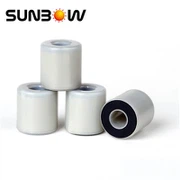
Amorphous / Silicon‑Steel Self‑Bonding Composite Ribbon
Aug 18, 2026
Against the backdrop of rapid growth in carbon‑neutrality and new‑energy industries, emerging sectors including electric vehicles, electric aircraft and electric vessels are reshaping the industrial landscape at an unprecedented pace. In 2025, China's new‑energy vehicle output and sales exceeded 16.5 million units for the full year, with sales accounting for 47.9% of total new‑vehicle sales. Amid this energy revolution, motor cores, as critical core components, are evolving toward higher power density, higher speed, miniaturization and lightweight design. Materials and lamination processes directly determine the upper limit of motor energy efficiency.

core materials are rapidly evolving toward 0.15 mm and 0.10 mm silicon‑steel grades, as well as 0.025 mm amorphous materials. Nevertheless, thinner materials bring manufacturers closer to physical limits, with processing‑technology challenges rising exponentially.
Leveraging its self‑bonding core technology and amorphous/silicon‑steel multi‑layer composite technology, SUNBOW has officially launched an amorphous‑silicon‑steel self‑bonded composite ribbon product portfolio. It supplies composite materials such as six‑in‑one self‑bonded amorphous composite ribbons and three‑in‑one self‑bonded silicon‑steel composite ribbons, fully enabling mass‑production stamping of cores made from ultra‑thin materials.
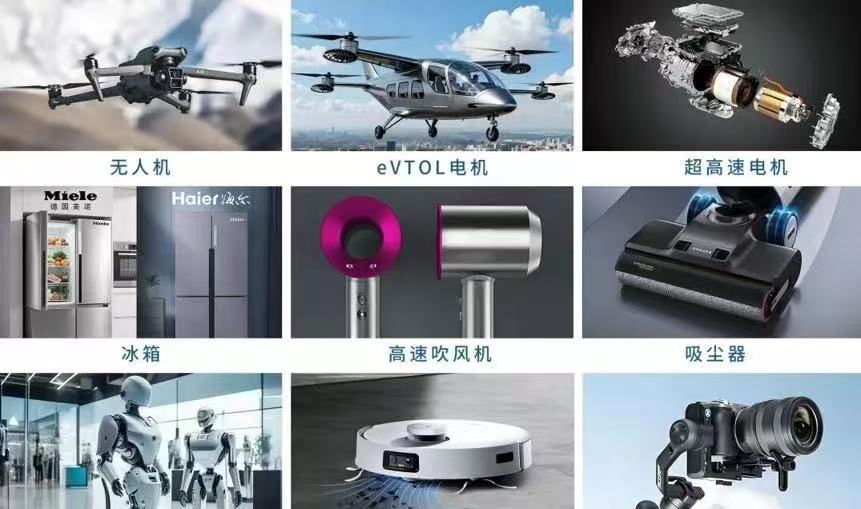
These products find wide‑ranging applications in electric aircraft, electric vehicles, electric vessels, aerospace, national defense and military industry, rail transit, high‑speed motor spindles, humanoid robots, household appliances, ultra‑high‑speed motors, high‑speed hair dryers, vacuum cleaners, robot vacuums and gimbal motors.

Self‑Bonded Amorphous Motor Core for Robot Joints
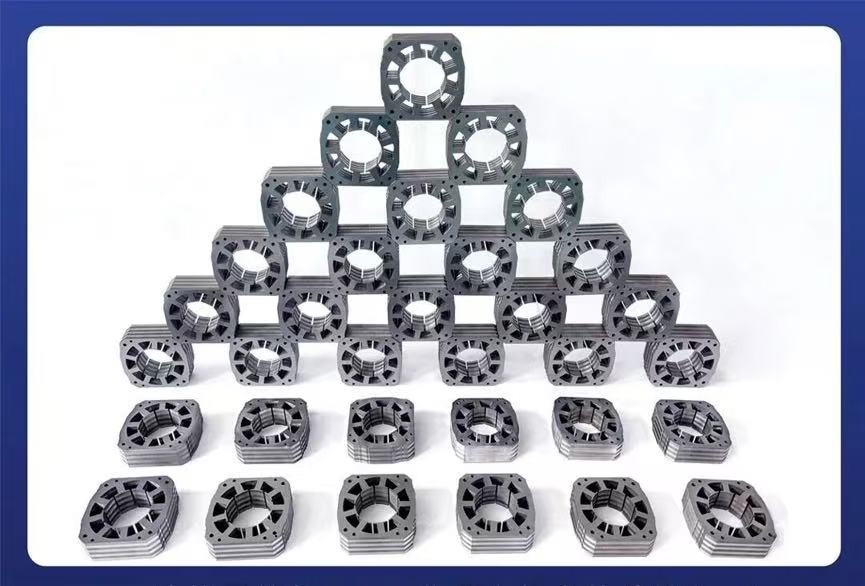
Self‑bonded Amorphous Motor Core for Refrigerator Compressor
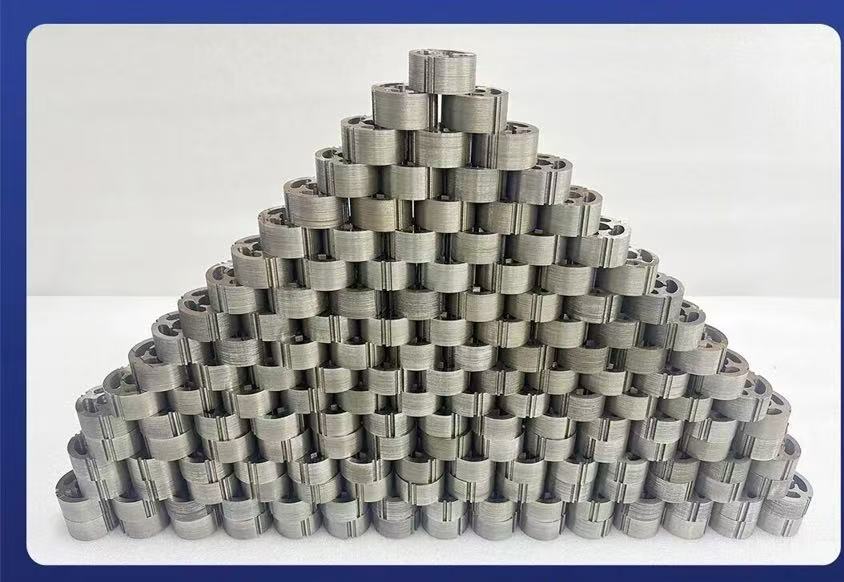
Self-Bonded Amorphous Motor Core for Vacuum Cleaner
Six‑in‑One Self‑Bonded Amorphous Composite Ribbon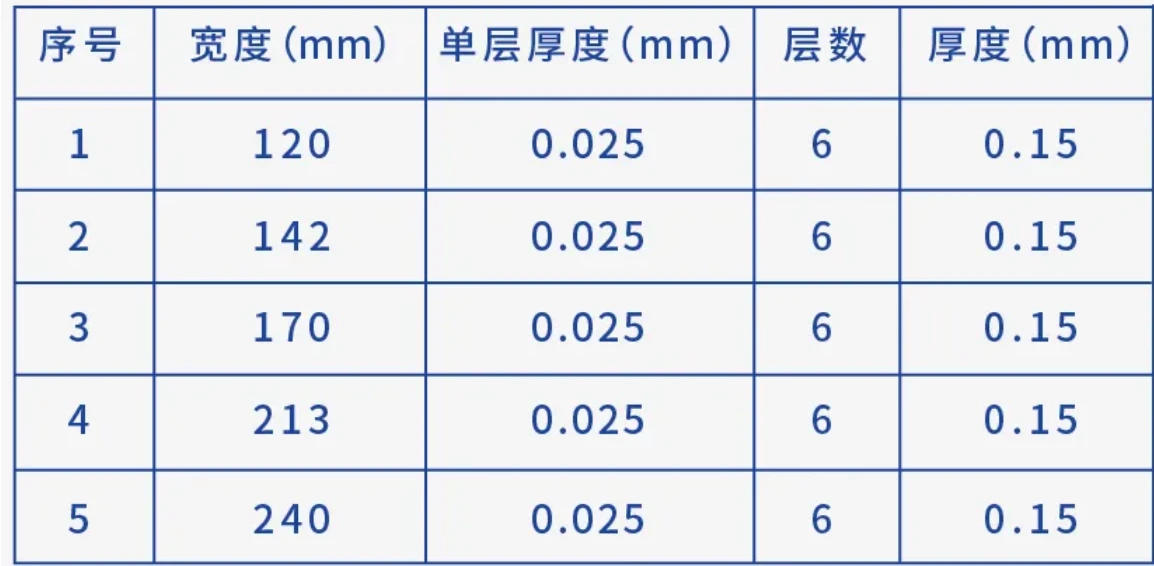

Amorphous alloy is hailed as the "crown jewel" among motor‑grade materials. Featuring a disordered atomic arrangement, it delivers extremely low coercivity and eddy‑current loss, making it the material of choice for electric aircraft and high‑end UAVs. However, being as thin as cicada‑wing (approximately one‑third the diameter of a human hair) and inherently brittle, it cannot be processed via conventional manufacturing methods.
SUNBOW has overcome this world‑class technical challenge by launching the Six‑in‑One Self‑Bonded Amorphous Composite Ribbon. It successfully addresses major pain‑points in amorphous‑ribbon stamping, boosts stamping capacity and efficiency, and cuts production costs.
Process Breakthrough: A specialized composite process bonds six layers of 0.025 mm amorphous ribbon into one integrated piece, granting outstanding mechanical strength.
Performance Advantages: It perfectly resolves the brittleness and poor stamping workability of amorphous ribbon. While preserving the ultra‑low core loss of amorphous materials, it significantly raises stamping throughput and yield rate.
Application Scenarios: Primarily adopted as stator core components for high-efficiency demanding motors, including UAV motors, eVTOL motors, ultra-high-speed motors, refrigerator compressors, high-speed hair dryers, vacuum cleaners, robot torque motors, robotic vacuum cleaners, and gimbal motors.
Three‑in‑One Self‑Bonded Silicon‑Steel Composite Ribbon


To address the industry‑wide challenges in mass‑producing ultra‑thin silicon‑steel cores - namely low yield rates and high costs, SUNBOW's proprietary silicon‑steel multi‑layer composite technology delivers an ideal breakthrough solution.
This technology laminates ultra‑thin materials of 0.10 mm and 0.15 mm into composite ribbons with equivalent thicknesses of 0.30 mm and 0.45 mm. While fully preserving the low‑loss and high‑magnetic‑induction properties of ultra‑thin materials, it achieves substantial improvements in both processing efficiency and cost performance.
Test results verify that the multi‑layer composite technology introduces no additional performance degradation. Magnetic properties remain consistent, and overall reliability is enhanced via optimized lamination design.
achieves substantial improvements in both processing efficiency and cost performance
1.At the die side
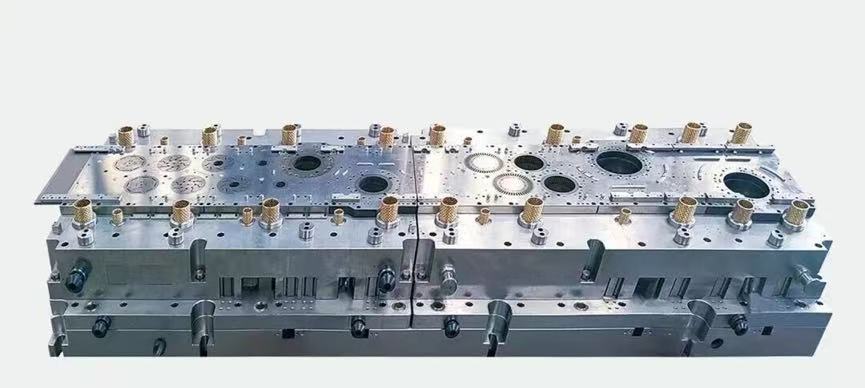
For single‑layer 0.10 mm silicon‑steel, after composite lamination to 0.30 mm total thickness, the stamping clearance is increased from 0.004~0.006 mm per side to 0.012~0.018 mm per side.
For single‑layer 0.15 mm silicon‑steel, after composite lamination to 0.45 mm total thickness, the stamping clearance is expanded from 0.006~0.009 mm per side to 0.018~0.027 mm per side.
This substantially reduces processing difficulty and scrap rate. Standard die materials and ordinary guide precision are sufficient to meet production requirements, eliminating reliance on imported equipment and special‑grade steel.
2. Stamping Side:
Productivity is tripled, with stamping speed increased from 130‑150 strokes per minute to 180‑220 strokes per minute. Dual‑row and multi‑row stamping are supported, bringing a 6%‑8% improvement in material utilization.

3. Cost Side:
Cost is reduced to one‑third of the original level (one production line replaces three). Die investment is accordingly cut to a single‑line level. Domestic stamping presses can substitute imported equipment, resulting in significant reductions in floor space, energy consumption and labor costs.

4. Lamination Side:
The material rigidity is significantly enhanced, which reduces the technical difficulty of lamination and greatly improves the yield rate of core lamination. It completely solves the common problems of loose laminations and high scrap rates inherent to ultra-thin materials, removing the core barriers for the large-scale commercial application of ultra-thin silicon steel.

III. The self‑bonded composite ribbons for amorphous motors feature self‑bonding coating, inter‑laminar insulation, multi‑layer composite structure, water‑based eco‑friendly coating, oil resistance and freon resistance.

Competition in motor cores is essentially a contest over material thickness and mass‑production processes. Whether for 0.1 mm silicon‑steel or 0.025 mm amorphous alloy, the "self‑bonding + composite ribbon" solution represents the only proven golden path to large‑scale, low‑cost and high‑performance manufacturing available today.