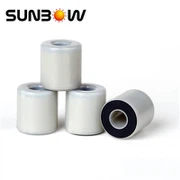
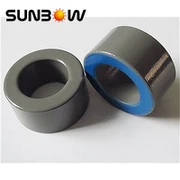
Differences in Applications Between Nanocrystalline Cores and Ferrite Cores
Nov 26, 2025
Nanocrystalline cores and ferrite cores are two widely used magnetic core materials, with distinct application scopes driven by their differences in magnetic properties (e.g., permeability, saturation magnetic flux density, loss characteristics) and environmental adaptability. Below is a detailed comparison of their applications:
1. Core Property Foundation (Key to Application Differences)
Before exploring application differences, it is critical to understand their core property gaps, as these directly determine their suitability for specific scenarios:
|
Property Indicator |
Nanocrystalline Cores |
Ferrite Cores |
|
Initial Permeability (μᵢ) |
Very high (typically 10,000–100,000) |
Moderate to low (typically 1,000–15,000) |
|
Saturation Magnetic Flux Density (Bₛ) |
High (1.2–1.4 T) |
Low (0.3–0.5 T) |
|
Core Loss (At High Frequency) |
Extremely low (excellent for high-frequency use) |
Higher (loss increases sharply with frequency) |
|
Curie Temperature (Tc) |
Moderate (400–500 °C) |
Lower (210–450 °C, varies by type) |
|
Cost |
Higher (complex manufacturing process) |
Lower (mature, low-cost |
2. Application Differences
(1) Power Electronics (Voltage Regulation, Inversion)
• Nanocrystalline Cores:
Dominant in scenarios requiring high efficiency, compact size, and high-frequency operation, such as:
○ High-frequency switching power supplies (SMPS): Used in server power supplies, industrial power modules, and high-end consumer electronics (e.g., laptop chargers). Their low high-frequency loss and high Bₛ enable smaller core sizes and higher power density (reducing energy waste during high-speed switching).
○ Active power filters (APFs) and reactive power compensators: High permeability ensures effective suppression of harmonic currents in power grids, critical for improving power quality in industrial plants (e.g., manufacturing facilities with variable-frequency drives).
○ High-power inverters: Applied in new energy systems (e.g., photovoltaic inverters, wind turbine converters) to handle high current loads while minimizing heat generation.
• Ferrite Cores:
Preferred for low-to-medium power, cost-sensitive, and moderate-frequency applications, including:
○ Low-power SMPS: Used in basic consumer electronics (e.g., phone chargers, small household appliances like rice cookers) where power demands are low (≤100 W) and cost control is a priority.
○ Linear power supplies: Employed in low-frequency (50/60 Hz) devices like desktop computer power supplies (legacy models) and small transformers for household lighting, as their moderate permeability meets basic voltage conversion needs at low cost.
(2) Magnetic Sensing and Signal Processing
• Nanocrystalline Cores:
Ideal for high-sensitivity sensing due to their ultra-high permeability, such as:
○ Current transformers (CTs) for precision measurement: Used in smart meters (electricity, water, gas), industrial current monitoring, and medical equipment (e.g., patient vital sign monitors). They can detect tiny current changes (μA level) with high accuracy, critical for energy metering and medical diagnostics.
○ Magnetic field sensors: Applied in automotive electronics (e.g., anti-lock braking system sensors) and aerospace equipment to detect weak magnetic signals in complex electromagnetic environments.
• Ferrite Cores:
Suitable for low-sensitivity, cost-driven sensing scenarios:
○ Basic current sensors: Used in low-precision industrial controls (e.g., simple motor current monitoring) and household safety devices (e.g., residual current circuit breakers, RCCBs) where high accuracy is not required.
○ Signal transformers for low-frequency signals: Employed in audio equipment (e.g., basic speakers) and analog signal transmission (e.g., telecommunication line transformers) to isolate or couple low-frequency signals (≤10 kHz) at low cost.
(3) Electromagnetic Compatibility (EMC) and Noise Suppression
• Nanocrystalline Cores:
Excellent for high-frequency noise suppression, common in:
○ EMC filters for high-speed circuits: Used in 5G communication equipment, data center servers, and automotive infotainment systems to suppress radio frequency interference (RFI) and electromagnetic interference (EMI) at frequencies up to several hundred MHz.
○ Common-mode chokes for high-frequency cables: Applied in USB 3.0/4.0 cables, HDMI cables, and industrial Ethernet cables to reduce common-mode noise and ensure stable signal transmission.
• Ferrite Cores:
Widely used for low-to-medium frequency noise suppression:
○ EMC filters for consumer electronics: Used in TVs, refrigerators, and basic IoT devices to suppress low-frequency noise (≤100 MHz).
○ Ferrite beads/clamps: Attached to power cables or signal lines of household appliances (e.g., washing machines) and low-speed electronic devices (e.g., basic routers) to absorb unwanted noise at a low cost.
(4) Specialized Fields (New Energy, Automotive, etc.)
• Nanocrystalline Cores:
Critical in high-performance, high-reliability fields:
○ Automotive electronics: Used in electric vehicle (EV) powertrains (e.g., on-board chargers, DC-DC converters) and advanced driver-assistance systems (ADAS). Their high Bₛ and low loss withstand high temperatures (up to 150 °C) and high current loads in EVs.
○ New energy storage: Applied in battery management systems (BMS) for lithium-ion batteries to monitor current and voltage with high precision, ensuring safe and efficient energy storage.
• Ferrite Cores:
Used in non-critical, low-cost components of specialized fields:
○ Automotive low-voltage systems: Employed in car audio systems, interior lighting transformers, and basic sensor modules (e.g., temperature sensors) where performance requirements are low.
○ Household new energy devices: Used in small solar inverters (≤1 kW) for residential use, balancing cost and basic energy conversion needs.
3. Summary of Core Application Trends
|
Scenario Requirement |
Preferred Core Type |
Typical Products/Devices |
|
High frequency, high efficiency, high precision |
Nanocrystalline Cores |
5G equipment, EV powertrains, smart meters |
|
Low cost, low-to-medium frequency, low power |
Ferrite Cores |
Basic phone chargers, household appliances, RCCBs |
|
High-sensitivity sensing or noise suppression |
Nanocrystalline Cores |
Medical monitors, ADAS sensors, high-speed EMC filters |
|
Cost-driven, low-sensitivity applications |
Ferrite Cores |
Basic current sensors, low-frequency signal transformers |