


Silicon Steel Transformer Core
A Silicon Steel Transformer Core is a kind of electrical engineering device that helps to safely increase or decrease the voltage in an electric circuit. It works on the principle of electromagnetism - when electrical current passes through a coil, it generates an electromagnetic field that can be used to convert low voltage into high voltage, or vice versa. In a Silicon Steel Transformer Core, two windings are wrapped around silicon steel laminations. An alternating current passes through one winding, this creates an alternating magnetic flux which then generates an induced current in the other winding-that's how electricity is converted from low to high voltages and back! Even though silicon steel cores are often bulky and heavy due to their physical components, they're incredibly efficient and cost-effective solutions for electricity transmission.
Your Professional Silicon Steel Transformer Core Manufacturer in China
Sunbow Group specializes in the design, development and production of new-type amorphous, nanocrystalline, silicon steel sheets and other magnetic materials and related products. The company's main products include various types of amorphous, nanocrystalline ribbons and high and low voltage current transformer cores, precision current transformer cores, common mode inductor cores, PFC inductor cores, high frequency power transformer cores and related devices.
Customized Solutions
We are at the forefront of a design led approach to delivering challenging and custom solutions for magnetic cores or components for production. Whether your need is simple or complex, we can develop a solution to achieve your goals. With in- house experts we can design, develop and test prototypes that meet performance and environmental requirements of your application.
Advanced Equipment
The company has advanced equipment such as large-scale vacuum smelting furnaces, pressure spraying belts, various magnetic annealing furnaces and close cooperation with domestic scientific research institutions and universities, which ensures the company's R & D ability and product quality.
Complete Qualifications
At present, the company has two production bases, with a number of patented technologies, and has passed ISO9001, IATF16949 quality management system certification. All products have passed ROHS, SGS and other environmental protection certifications.
Wide Range of Applications
The company mainly serves the fields of new energy vehicles, photovoltaic power generation, wind power generation, smart home appliances, smart meters, wireless charging, and various power supplies, inverters, filter inductors, and shielding materials in the national strategic emerging industries.
Our Related Products

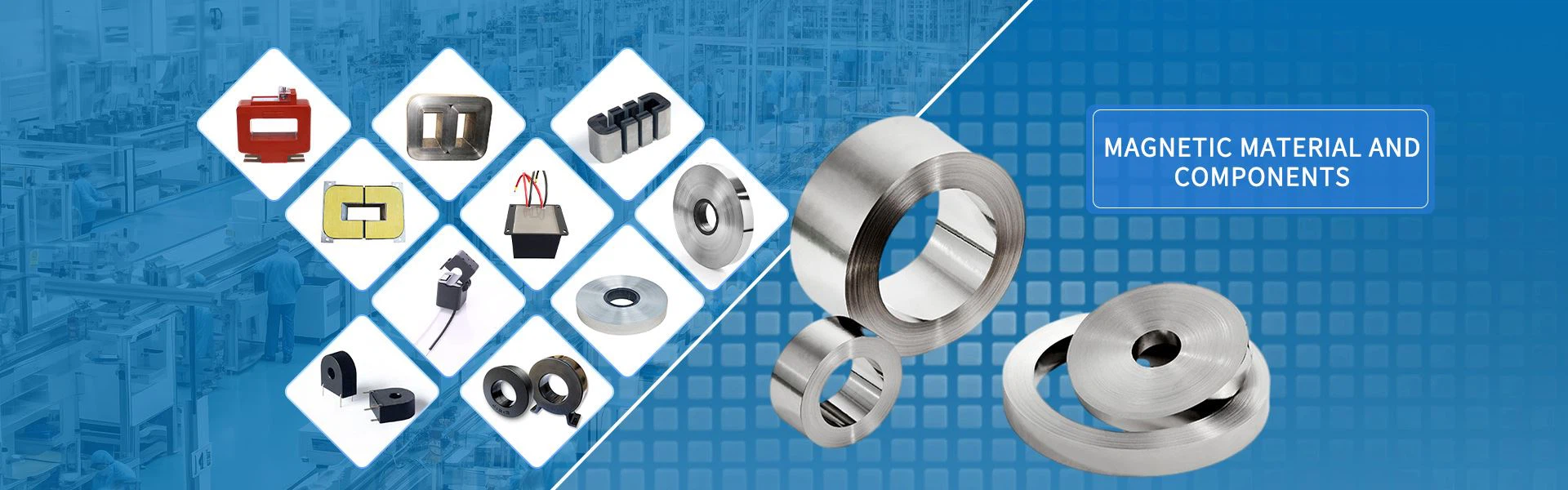
Silicon Steel Transformer Core
Silicon steel, also known as electrical steel, is a type of metal alloy that contains small amounts of silicon. It is a traditional material that has been used in transformer cores for many years. The material has a high magnetic permeability and low core loss, making it a good option for power transformers.

Grain oriented electrical steel is an important material in the production of energy efficient transformers and large, high performance generators. In the form of laminated, wound or punched sheets, it is the essential core material of distribution transformers, power transformers and small transformers.

Iron powder cores are commonly used in power conversion, line filter applications and radio frequency applications. Oftentimes, iron powder cores substitute ferrite cores. Ferrite cores have a high permeability so it needs an air gap to reduce this permeability. This air gap has the disadvantage of power loss, leading to the risk of a hot spot.

Powder cores are distrib air gap cores made from ferrous alloy powders for low losses at high frequencies. Small air gaps distributedevenly throughout the cores increase the amount of Direct Current(DC)that can be passed through the winding before core saturation occurs.

Fe-Si-Al alloy powder cores are a kind of soft magnetic powder cores with nominal composition of 85% iron, 9% silicon and 6% aluminum. As Fe-Si-Al cores were firstly developed by Japanese in Sendust in the 1930s, so they are well known as Sendust cores. They are also known as Kool Mμ Cores (Magnetics).

Leakage Protection Switch Transformer Core
Higher permeability achieves lower measurement error and higher measurement accuracy. The current silicon steel CT cores cannot achieve the ideal measurement accuracy under the situation of low Ampere-tums or small turn ratios, and the Fe-Ni Perm-alloy core application is limited because of its low magnetization and high cost.

Nanocrystalline Core For Common Mode Choke
Due to unique combination of magnetic properties, nanocrystalline cores are widely used in application of common mode choke (CMC). Low cost(iron-based) and large-scale production (rapid solidification technology) make SWFNA being a more competitive solution especially than ferrite in EMC field.

Switching Power Transformer Cores
A transformer core is a static device that provides a channel for magnetic flux to flow in a transformer. The core is constructed using thin strips of silicone steel. The silicon steel sheets are electrically isolated and coupled to reduce no-load losses in the transformer.

Nanocrystalline C core is an upgraded product of amorphous C core. It has the characteristics of high saturation magnetic flux density, low coercive force, low iron loss and extremely low noise.
Introduction of Silicon Steel Transformer Core
A Silicon Steel Transformer Core is a kind of electrical engineering device that helps to safely increase or decrease the voltage in an electric circuit. It works on the principle of electromagnetism - when electrical current passes through a coil, it generates an electromagnetic field that can be used to convert low voltage into high voltage, or vice versa.
In a Silicon Steel Transformer Core, two windings are wrapped around silicon steel laminations. An alternating current passes through one winding, this creates an alternating magnetic flux which then generates an induced current in the other winding-that's how electricity is converted from low to high voltages and back! Even though silicon steel cores are often bulky and heavy due to their physical components, they're incredibly efficient and cost-effective solutions for electricity transmission.
Advantages of Using Silicon Steel for Transformers Core
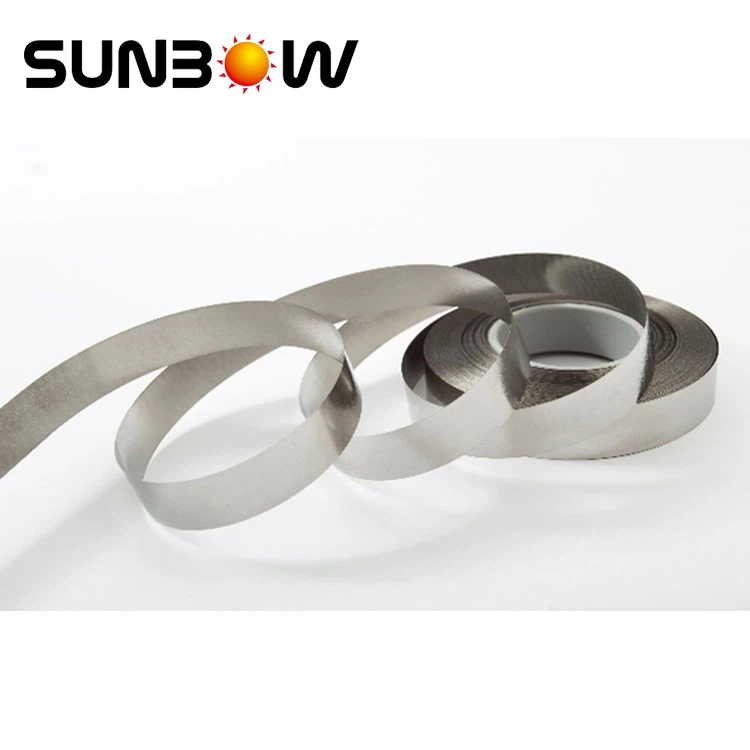
Reduced Core Losses
In the realm of electrical devices, core losses are a significant concern. These losses occur during the magnetization and demagnetization of the core material, resulting in energy dissipation in the form of heat. However, with the use of high-grade silicon steel laminations, these losses can be minimized. This material has low magnetic coercivity and resistivity, allowing for better energy conversion and reduced core losses. By minimizing core losses, electrical systems can operate more efficiently, resulting in higher overall performance.

Lower Eddy Current Losses
Eddy currents, induced currents that circulate within conductive materials when exposed to changing magnetic fields, can lead to energy losses and reduced efficiency in electrical devices. However, engineers have found a solution to mitigate these losses. By utilizing laminated cores, consisting of thin layers of conductive material separated by insulating layers, the path for eddy currents is reduced. This limits their magnitude and minimizes energy dissipation. With effective management of eddy currents, electrical systems can achieve higher efficiency and improved performance.

Improved Energy Conversion
Efficient energy conversion is crucial in various electrical systems. Engineers have made significant progress in this area by employing advanced technologies and design strategies. This includes optimizing the design of electrical components, such as transformers, to minimize energy losses during the conversion process. Additionally, the use of advanced semiconductor materials, such as silicon carbide (SiC) and gallium nitride (GaN), has further improved energy conversion efficiency. These materials offer lower resistance and faster switching speeds, resulting in reduced energy losses and improved energy conversion.
Commonly used transformer cores are generally made of silicon steel sheets. Silicon steel is a kind of silicon (silicon is also called silicon) steel, and its silicon content is 0.8 to 4.8%. The core of the transformer made of silicon steel is because silicon steel itself is a magnetic substance with strong magnetic permeability. In the energized coil, it can generate a large magnetic induction intensity, which can reduce the size of the transformer.
We know that the actual transformer always works in AC state, and the power loss is not only in the resistance of the coil, but also in the iron core under the alternating current magnetization. The power loss in the iron core is usually called "iron loss". The iron loss is caused by two reasons, one is "hysteresis loss" and the other is "eddy current loss".
Used as the iron core of the transformer, cold-rolled silicon steel sheets of 0.5mm and 0.35mm thickness are generally selected. According to the size of the iron core, it is cut into long pieces, and then overlapped into the shape of "day" or "mouth". In theory, if the thickness of the silicon steel sheet is thinner to reduce the eddy current, the narrower the spliced strips, the better the effect. This not only reduces the eddy current loss, lowers the temperature rise, but also saves the material of silicon steel sheet. But in fact when making silicon steel sheet iron core. It is not just from the above-mentioned favorable factors, because the production of the iron core in that way will greatly increase the working hours and reduce the effective cross section of the iron core. Therefore, when using silicon steel sheet to make the transformer core, we should weigh the pros and cons from the specific situation and choose the appropriate size.
Production Process of Silicon Steel Transformer Core
Transformer core itself is a design technology, which mainly includes the following design process:
Steel Coil Transmission Data → Intelligent Data Storage → Internal Operation → Automatic Longitudinal and Transverse Cutting → Robot Core Lamination and Assembly → Iron Core Shipping
In this process, all the silicon steel sheets are "soft contact", there is no truck lifting, no personnel involved in direct production, and no personnel touch the silicon steel sheets, realizing the whole process automation from the storage of silicon steel sheets to the stacking of finished iron core products.
Our Certificates
All products have passed ROHS, SGS and other environmental protection certifications.


Our Testing Equipment


Common Problem of Silicon Steel Transformer Core
Hot Tags: silicon steel transformer core, China silicon steel transformer core manufacturers, suppliers, factory, Silicon Steel Sheet Core, grain oriented electrical steels, silicon iron core transformer, tape wound toroidal core, silicon steel iron core, electrical steel core




Send Inquiry
