What is nanocrystalline core, its advantages and applications?
Jan 10, 2024
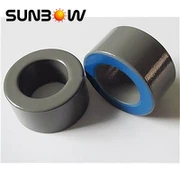
Nanocrystalline cores are made from very small crystals, It is usually made by winding nanocrystalline ribbons of 10-30μm thickness.
Nanocrystalline cores have revolutionized the field of power electronics by offering higher efficiency, lower losses, and smaller size.
These cores have a high saturation flux density and low hysteresis loss, leading to higher efficiency in power applications. They also have a high permeability, allowing for smaller sized components to be used in power supply designs.
One of the key advantages of nanocrystalline cores is their ability to operate at high frequencies. This is due to the low eddy current losses and high resistivity of the material. This allows for the development of high-frequency power supplies that are smaller, lighter, and more efficient.
Another important property of nanocrystalline cores is their thermal stability. They can operate at high temperatures without significant loss of magnetic properties, making them ideal for use in high-temperature applications.
Nanocrystalline cores find applications in a wide range of power electronics devices, including transformers, inductors, and chokes. They are particularly well-suited for use in switch-mode power supplies, which require high frequencies and low losses.
In addition, nanocrystalline cores are used in alternative energy technologies, such as wind and solar power. They help to improve the efficiency of power conversion and reduce the size of the power electronics components, which is particularly important in renewable energy generation.
In conclusion, nanocrystalline cores have transformed the field of power electronics by offering higher efficiency, lower losses, and smaller size. Their unique properties make them ideal for use in a wide range of applications, from switch-mode power supplies to renewable energy systems. As technology continues to advance, we can expect to see even more exciting developments in the field of nanocrystalline core materials.